Bavarian Mountain Scent Hound Behavior: Temperament, Training and Daily Life
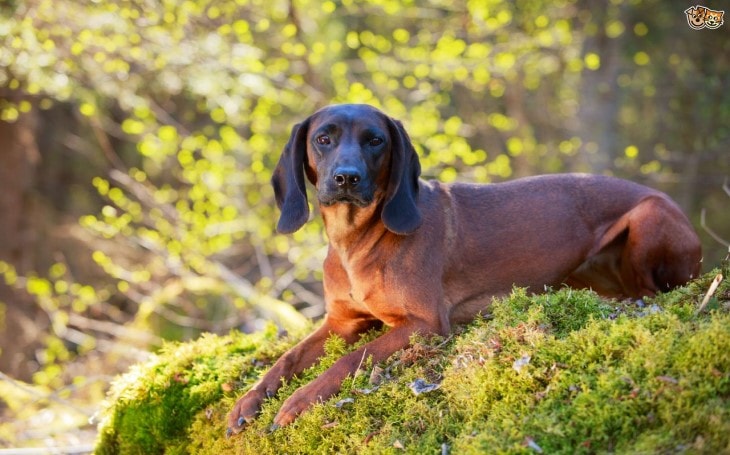
The Bavarian Mountain Scent Hound (Bayerischer Gebirgsschweißhund in German) is a tracking breed developed from the Hanoverian Scenthound and Bavarian hunting hounds. Its traditional job was to follow the cold trail of wounded game over steep, broken ground, often hours after the shot. Much of what the breed does at home comes from that working history.
So what should you actually expect? A medium-sized, calm-mannered dog who is deeply attached to its own family, polite but reserved with strangers, quiet around the house, and intensely interested in ground scent. It is usually not a bouncy, loves-everyone dog, and it is not a breed you can simply let off the lead in an open field without months of careful training.
That combination suits some households very well and frustrates others. Below is what the breed’s temperament, training needs and day-to-day life really involve.
What Are Their Temperaments Like?
Bavarian Mountain Scent Hounds are known for forming a close bond with the people they live with. They want to be where their owner is, and they generally do poorly when kept in a kennel or left in a yard for most of the day. This is a hound bred to work within arm’s reach of one handler, not to live independently outdoors.
With strangers they are typically reserved rather than unfriendly. They may ignore visitors, watch them from a distance, or warm up slowly. A few are more open, and a poorly socialized one can be sharp or fearful, which is why early, positive exposure to different people, dogs, surfaces and sounds matters. Well-raised adults are usually described as steady and self-assured.
The other half of the temperament is independence. These dogs solve problems on their own and are used to working without constant direction, which can look like stubbornness when you want them to come inside and they want to finish a scent line. That is not defiance; it is a very strong priority system in which smell usually comes first.
Do Bavarian Mountain Scent Hounds Get Separation Anxiety?
They are more likely than many breeds to struggle with long periods alone, given how closely they attach to their person. Not every individual will develop separation anxiety, but a dog left for a full working day is at real risk of distress.
Watch for pacing, whining or howling after you leave, destructive chewing around doors and windows, house soiling in a house-trained dog, drooling, or attempts to escape. Build absences gradually from short periods, leave something to occupy the nose, and speak to a veterinarian or qualified behaviorist if the distress is severe — it rarely resolves on its own, and punishment makes it worse.
Personality Of Bavarian Mountain Scent Hound
The breed’s personality is usually described as gentle, calm and even-tempered, with a strong affectionate streak toward family and a cool reserve toward everyone else. Physically they are medium-sized, lean and muscular, with a dense, close-fitting coat that is commonly reddish-brown to fawn with a dark muzzle and ears, though colour varies between lines. A well-raised adult is confident without being pushy, and quiet indoors when its needs are met.
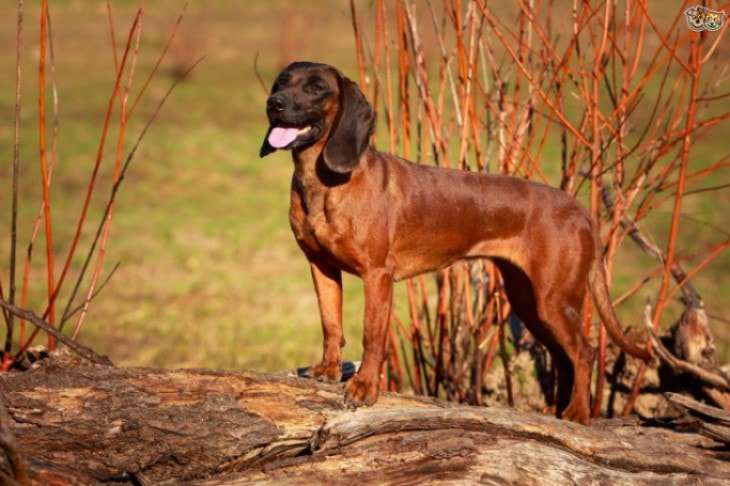
Image Via Pet4Homes
With their own people, these dogs are openly affectionate: leaning in for contact, following you between rooms, wagging and licking. The calmness is genuine, but so is the intensity when there is a scent to follow. The same dog that sleeps through the afternoon may become completely deaf to you the moment its nose goes down.
Are They Good With Children?
In general, yes, provided the household is sensible about it. Bavarian Mountain Scent Hounds tend to bond with everyone in the family, children included, and many tolerate a fair amount of noise and activity. They are not especially fragile dogs and usually enjoy being part of family life.
That said, no breed is automatically safe with children, and a hound’s tolerance has limits. Children should be taught not to climb on the dog, take food or chews away, or corner it while it rests. Give the dog a quiet place it can retreat to and make sure children cannot follow it there. Supervise interactions, especially with toddlers, and never leave a young child alone with any dog. If a dog growls or snaps, treat that as information: have it checked by a vet for pain and assessed by a qualified trainer rather than punished.
How Are They With Other Dogs And Pets?
Many live comfortably with other dogs, particularly when introduced carefully or raised together. Same-sex pairings can be more tense, and a hound in full scent mode may ignore canine social signals, which irritates other dogs. Small pets such as rabbits, guinea pigs or cats are a different matter: this is a hunting breed, and a fast-moving small animal can trigger pursuit. Some individuals live safely with cats they grew up with, but nothing should be assumed, and introductions need supervision and management.
How Does It Feel To Live With A Bavarian Mountain Scent Hound?
Life with one is quieter and more structured than life with a retriever or a herding breed, but it is not low-effort. The breed needs daily physical exercise — a couple of decent walks or a long hike — and, more importantly, regular work for its nose. Without that, the calm exterior tends to crack into restless pacing, chewing, barking or door-dashing.
Scent games, mantrailing or a tracking class do more for this dog than an extra lap around the block. Many owners find that twenty minutes of nose work tires their dog more than an hour of walking.
Training needs patience and consistency. These dogs are not slow, but they are not eager to please for its own sake. Reward-based methods work well; heavy-handed corrections tend to produce a dog that only performs when watched. Short sessions, clear rules and rewards that genuinely matter to the dog — food, a scent trail, the chance to track — get the best results.
Two practical points matter more than most owners expect. The first is containment: a secure fence with no gaps, locked gates, and a microchip with up-to-date details, because a scent-driven hound that gets out may not come back quickly. The second is grooming, which is easy — a weekly brush and regular ear checks, since the long, hanging ears trap moisture and debris.
Training A Bavarian Mountain Scent Hound
Start early and keep it positive. Socialization from puppyhood, house manners and a solid recall foundation come first. Because the breed is bred to work independently, obedience has to be proofed in gradually harder conditions: first in the garden, then on quiet walks, then near interesting smells, and only much later around wildlife.
Can They Be Trusted Off-Leash?
Sometimes, with a great deal of work — but never assume it. A Bavarian Mountain Scent Hound that picks up an interesting trail may stop hearing you entirely, and a dog following scent can step into a road without looking. Long lines, enclosed fields and tracking on a harness give the dog the outlet it needs without gambling with its safety. If reliable off-lead exercise is essential to you, this may not be the right breed.
Do They Need A Job?
Yes, in a practical sense. It does not have to be real hunting. Tracking games, scent puzzles, search-and-find at home and a structured mantrailing group all satisfy the same drive. A dog with a job is usually calm and settled at home; a bored one invents its own work.
Common Misconceptions About The Breed
- “Stubborn and dominant.” These dogs are independent and easily absorbed by scent, not trying to take over the household. Dominance-based corrections are outdated and can make a sensitive hound more cautious or more defensive.
- “Fine living outdoors in a kennel.” They are strongly people-oriented and generally do badly without close daily contact.
- “A calm dog is a low-energy dog.” The calmness is real indoors, but the mental drive is high.
- “Good with every animal because they are gentle.” Gentleness toward people does not automatically extend to cats, poultry or small pets.
Health And Behavior: When To See A Professional
This is generally a robust breed, but the long ears need routine checking for infection, and as with many medium and large dogs, joint problems such as hip and elbow dysplasia are worth asking a breeder about. Sudden changes in behavior — snapping, hiding, reluctance to be touched, loss of appetite or restlessness at night — are often signs of pain or illness rather than a personality change, so a veterinary appointment comes first. For fear, anxiety, resource guarding or aggression, a qualified behaviorist or veterinary behaviorist can assess the individual dog; general advice cannot substitute for that.
Is A Bavarian Mountain Scent Hound Right For You?
They fit best with owners who want a close-working companion, can offer daily exercise plus scent work, have a securely fenced garden, and are prepared to train with patience rather than force. They suit active households, including families with sensible children, and people who enjoy teaching a dog to use its nose.
They fit poorly with households where the dog would be alone for long stretches, live mainly outdoors, or where regular off-lead freedom in open country is a non-negotiable expectation. None of this is a criticism of the breed; it is simply a working hound doing what it was bred to do.
For more on this breed’s background and care, see our Bavarian Mountain Scent Hound breed guide, and visit Doglime for more dog breed information and behavior articles.