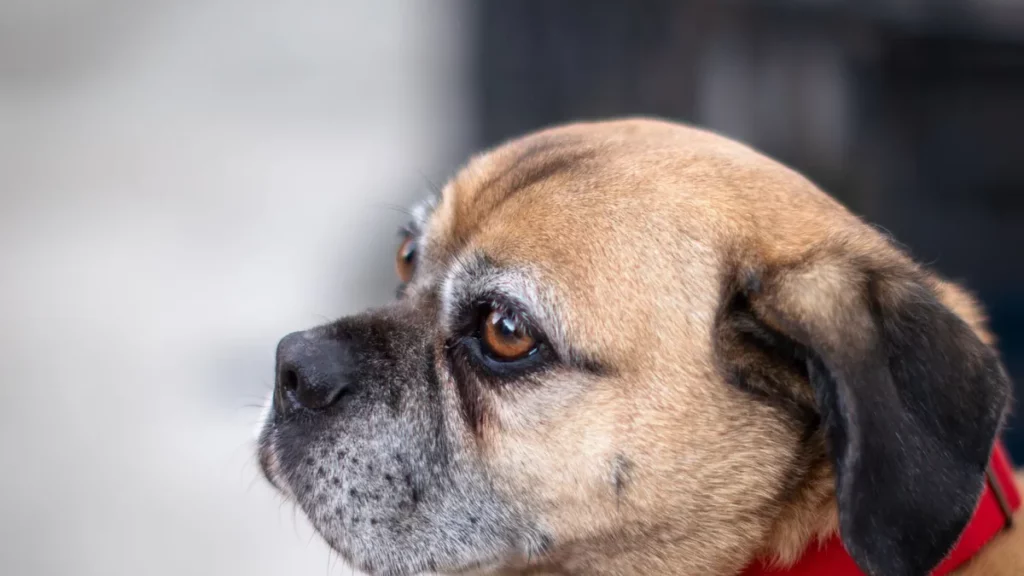
Puggle at a glance
About the breed
Personality and traits out of 5
Friendliness and suitability
Last updated: November 26, 2026
A puggle is a Pug crossed with a Beagle, and the result is exactly what you’d expect: a small, sturdy clown with a Beagle’s nose and a Pug’s devotion to the sofa. This designer cross has no breed standard of its own, so everything in this guide comes from the two parent breeds, measured by the AKC and PDSA. You’ll get honest ranges for size, temperament, exercise and health — and the places where a Puggle can surprise you.
Quick facts
| Fact | Puggle |
|---|---|
| Parent breeds | Pug and Beagle |
| Height | About 10 to 15 inches (AKC parents) |
| Weight | About 14 to 30 pounds (AKC parents) |
| Coat | Short, smooth coat, from both parents |
| Colours | Fawn, black, black and tan, or tricolor |
| Exercise | 1 to 1.5 hours a day (PDSA) |
| Shedding | Moderate to heavy; brush weekly |
| Lifespan | Roughly 10 to 15 years (AKC parents) |
| AKC recognition | Not recognised by the AKC |
What is a Puggle?
A puggle is a cross between a Pug and a Beagle, also called a Bug or a Peagle and searched as a pug beagle mix. It is a designer cross, not a pedigree breed: no kennel club recognises it or keeps a standard for it. The AKC recognises the two parents, not the cross, so there is no set size, coat, or temperament to breed toward.
The origin story has one wrinkle. Breed-history sites credit Wisconsin breeder Wallace Havens with the first intentional Puggle litters in the late 1980s and early 1990s, and say he coined the name and registered the cross with the American Canine Hybrid Club. The live DogLime page says the cross began accidentally in the 1990s instead. No kennel club or vet source settles it, so this guide keeps the Havens account and flags the disagreement.
Most Puggles are first-generation crosses, and two puppies from one litter can grow up quite differently. The Pug brings a compact body, a short muzzle, and a lapdog’s devotion to people. The Beagle brings longer legs, a longer muzzle, floppy ears, and a scent hound’s nose. A Puggle usually lands between the two, with a wrinkled forehead and a tail that often curls. Read our full Pug breed guide and our Beagle breed guide for the two sides of this cross.
Size and weight
Start with the parents, because they’re the only measured figures we have. The AKC lists the Pug at 10 to 13 inches tall and 14 to 18 pounds. The AKC lists the Beagle in two varieties: 13 inches and under, usually under 20 pounds, and 13 to 15 inches at 20 to 30 pounds.
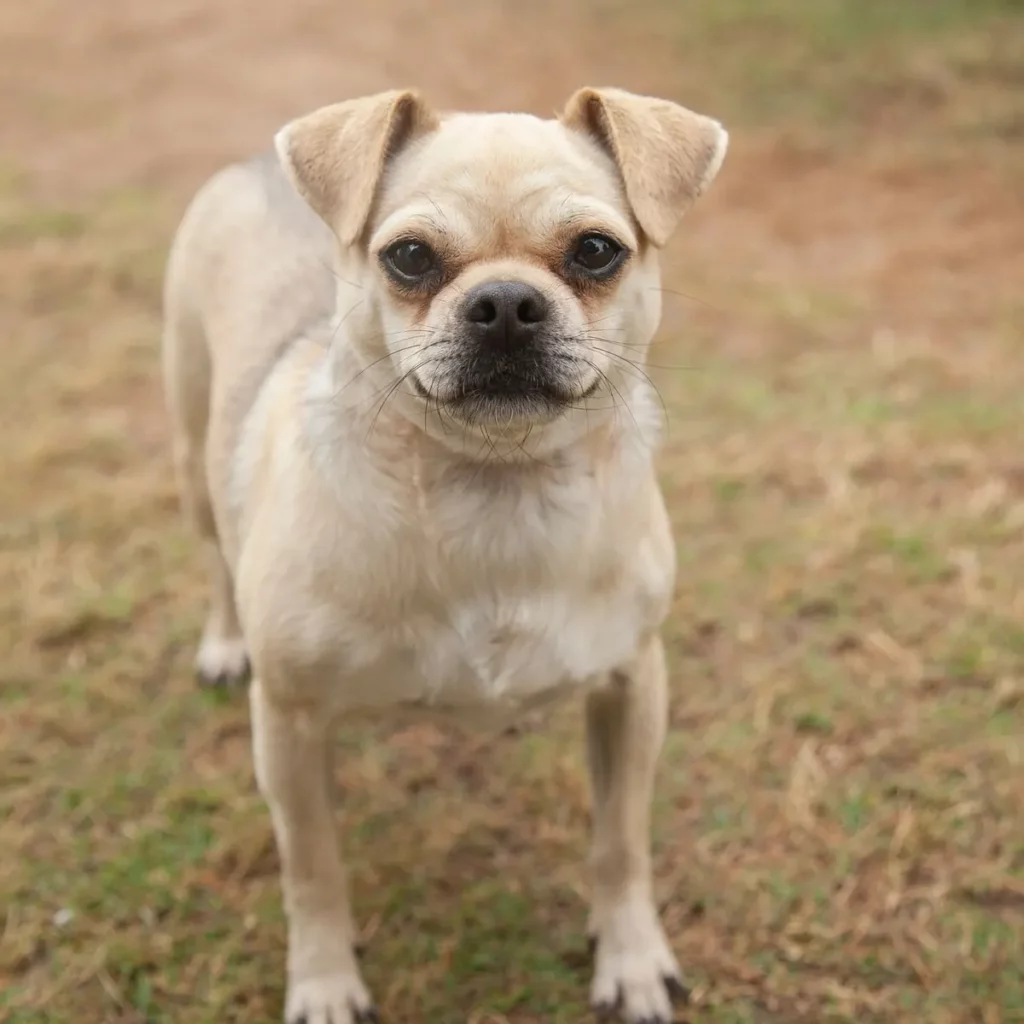
So a Puggle usually stands about 10 to 15 inches and weighs about 14 to 30 pounds — sturdy and small-to-medium, not tiny. Males tend to run a little larger, as in both parent breeds.
One correction to the live page: it lists the Puggle at 15 to 40 pounds. That top end sits above both parents’ AKC ranges, and no source backs it, so this refresh drops it. A Puggle can pass 30 pounds if it overeats, but 40 pounds isn’t a healthy breed frame, it’s an overweight dog.
Weight needs watching. PDSA warns that Pugs pile on weight easily and that extra weight makes their breathing problems worse. Beagles are just as food-driven, so measure meals and ask your vet what your dog should weigh. Our Beagle diet guide covers the food-driven side of this cross.
Temperament
The two parents agree on the important thing: people. The AKC describes the Pug as charming, mischievous and loving, and the Beagle as merry, friendly and curious. PDSA calls Pugs intelligent and very affectionate, and says they can’t tolerate being left alone. Its Beagle guide calls Beagles loving and sociable, happiest when involved in whatever is going on in the house.
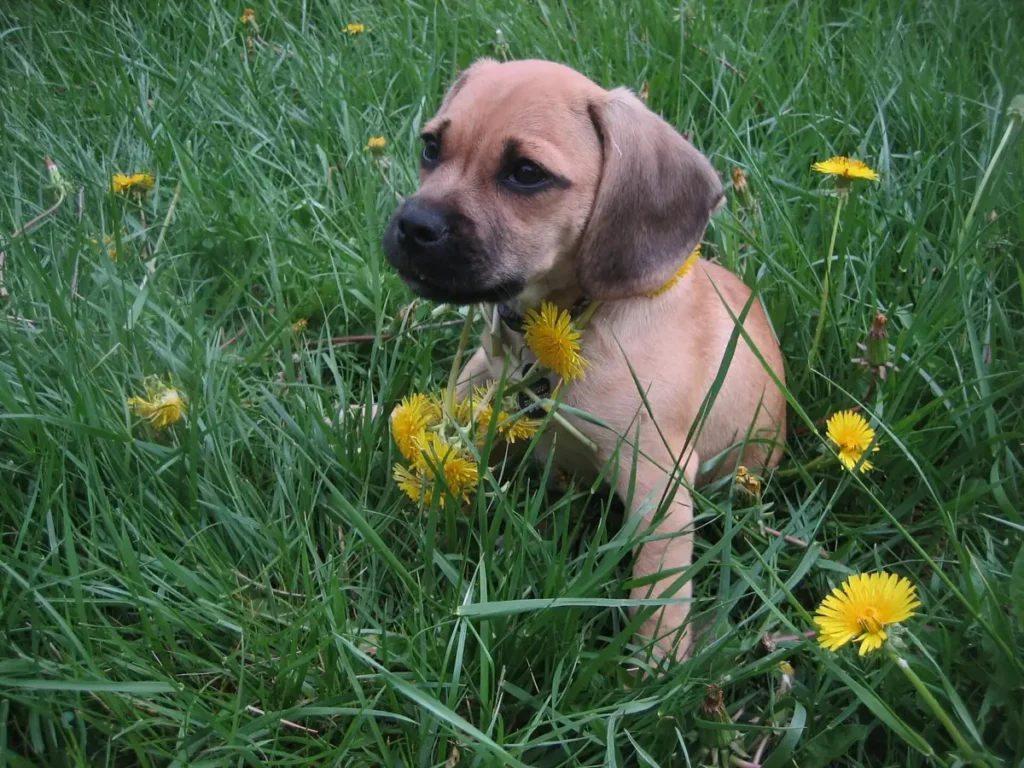
Your Puggle will be a clown and a shadow in equal measure: a dog that follows you room to room, leans on your leg while you cook, and tries to make you laugh when you’re busy. Most are sweet with strangers, not suspicious, and rarely make good watchdogs.
Children usually do well with this cross: PDSA says Pugs often get on well with children, especially if the dog loves to play, and Beagles suit family life when socialised young. Supervise anyway, and teach children to approach and touch the dog gently.
Other pets are usually fine too, with one exception. PDSA says well-socialised Pugs get along with other pets and dogs, and Beagles love company. But Beagles are scent hounds, and PDSA advises against leaving them unsupervised with smaller pets — a Puggle with the Beagle’s prey drive may fixate on a rabbit or hamster.
Barking, howling, wandering and digging all come from the Beagle side: PDSA notes Beagles can be more vocal when left alone, and that they are escape artists that love to climb and dig. A Puggle needs a secure garden, not an open one.
My honest warning: I wouldn’t recommend a Puggle if your house is empty all day. Both parents hate being alone, and a lonely Puggle barks, chews, and digs. If you work long hours away from home, this is the wrong cross, however cute the puppy photos are. See our Puggle puppy photos if you need a reminder of how cute — then decide with your calendar, not your heart.

Exercise
The parents disagree on exercise, and your Puggle will land between them. PDSA says a Pug needs up to an hour a day, in shorter walks with extra playtime, and warns Pugs tire easily and overheat because their flat faces make breathing hard. For Beagles it sets at least an hour and a half a day: walking and running, plus play, training and secure-garden time.
Plan on one to one and a half hours a day for a healthy adult Puggle, split into two or three outings, plus scent games — hiding treats around the garden or house — because the Beagle nose needs work, not just steps.
Heat is the real limit. A Pug-leaning Puggle will struggle on a hot day, so walk early or late when it’s cooler, as PDSA advises. Heavy panting, drooling, or a dog that stops and refuses to move means stop, cool the dog down, and call your vet if it doesn’t settle.
Recall needs its own warning: PDSA says Beagles suffer from selective hearing, and recall fails when they catch a scent more interesting than you. Keep your Puggle on a lead outside secure areas.
Training
Training a Puggle is a negotiation, not a drill. PDSA says Pugs are clever but very strong-willed, and Beagles very intelligent and wilful. Both guides agree on method: positive, reward-based training from day one, firm but fair, with everyone in the family following the same rules.
Keep sessions short and fun, as the live page already advises: five focused minutes beats twenty bored ones. Use small, low-calorie treats — PDSA warns treats shouldn’t exceed 10% of a Pug’s daily calories — and count them against meals.
Start socialisation early — lots of dogs, people, and everyday experiences; PDSA stresses it for both parents. A well-socialised Puggle is the friendly clown people expect; one kept at home grows nervous and noisy. First-time owner? PDSA suggests an accredited trainer for Beagles if you aren’t experienced, and the same advice fits this cross.
Shedding and grooming
Here’s the surprise most new owners don’t expect: a short coat doesn’t mean light shedding. PDSA says Pugs shed loads despite their short coats, and PDSA says Beagles shed a reasonable amount too, with a weekly brush enough to keep on top of dead hair.
So expect hair on clothes and furniture all year, heavier in spring and autumn. Brush once a week, more during a heavy shed. It won’t stop the shedding — nothing does — but it keeps the worst of it in the brush instead of on the sofa.
Beyond the brush, grooming has two jobs. First, the face folds: PDSA warns damp folds breed bacterial and fungal infections, so wipe and dry them, especially after baths. Second, the ears: PDSA advises keeping Beagles’ long, floppy ears clean and dry to prevent infection. Check both weekly.
Coat colours follow the parents: the AKC Pug standard accepts fawn and black, and Beagles come in any true hound colour. A Puggle usually shows fawn, black, black and tan, or tricolor, often fawn with a black mask. The live page lists five colours (black, red, white, black and tan, brown) without a source and leaves out fawn, the most common Puggle colour of all.
Health and lifespan
No registry tracks this mix’s health, so look at both parents and ask any breeder or rescue what screening the parents had. PDSA lists the Pug’s problems plainly: brachycephalic obstructive airway syndrome (BOAS) from the squashed nose, eye problems including dry eye, corneal ulcers and trauma, skin infections in the face folds, luxating patellas, Pug dog encephalitis, hip and elbow dysplasia, and hypothyroidism.
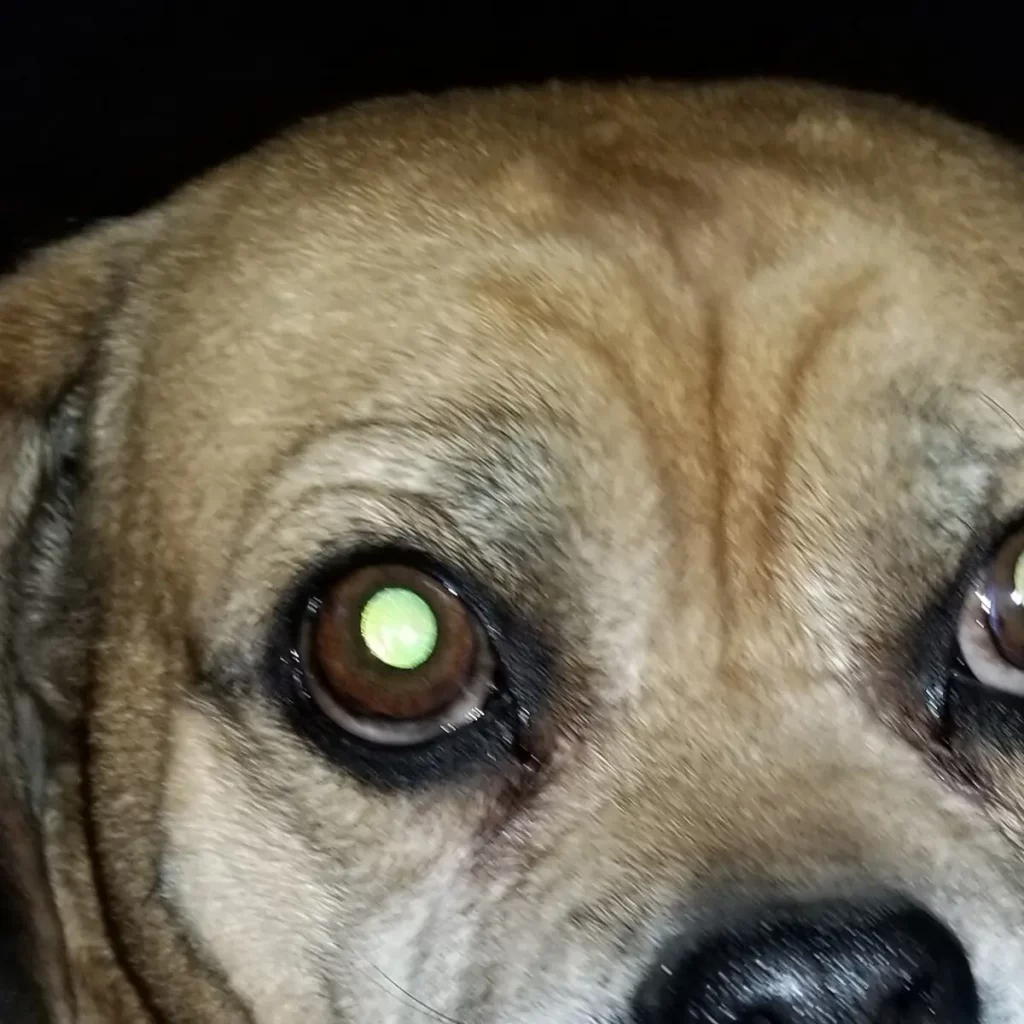
From the Beagle side, PDSA lists epilepsy, meningitis, hypothyroidism, certain cancers, intervertebral disc disease, eye conditions including cherry eye, and ear infections. Cherry eye — the third-eyelid gland bulging out as a red mass in the corner of the eye — is the one the live page names, and PDSA confirms it sits on the Beagle side.
A Puggle can inherit breathing trouble from the Pug, and epilepsy and thyroid trouble from either parent. A longer muzzle than a pure Pug usually helps the breathing, but it doesn’t guarantee it: some Puggles snore, snort, and struggle in heat just like a Pug. If you’re buying a puppy, look for open nostrils, quiet breathing, and a visible muzzle, and ask for the parents’ health screening, as PDSA recommends.
No lifespan figure is tracked for the mix itself. The AKC lists the Pug at 13 to 15 years and the Beagle at 10 to 15 years, so plan for roughly 10 to 15 years. Weight control and steady vet care give your dog the best chance at the longer end.
For comparison, our Husky Pug mix (Hug) guide covers a bigger, higher-energy cousin, and our Frenchie Pug guide a smaller, flatter-faced one. The Puggle sits between them.
Your next step is to meet adult Puggles before you commit: visit a rescue or a breeder, watch how the dog breathes after a short walk, and ask what health screening the parents had. If your week holds an hour or more of exercise a day, someone home most of the time, and a weekly brush, a Puggle will pay you back with a decade of company and comedy.
FAQ
A Puggle is a designer cross between a Pug and a Beagle, also called a Bug or a Peagle. It is not recognised by the AKC or any major kennel club, and there is no breed standard for it. Most Puggles are first-generation crosses, so puppies in one litter can vary a lot in size, coat, and temperament.
Most Puggles stand about 10 to 15 inches tall and weigh about 14 to 30 pounds. Those ranges come from the AKC parent standards: the Pug is 10 to 13 inches and 14 to 18 pounds, and the Beagle is up to 15 inches and up to 30 pounds. Expect a sturdy small-to-medium dog.
Usually, yes. Both parents are friendly, people-loving breeds, and PDSA says Pugs often get on well with children while Beagles suit family life when socialised young. Always supervise children and dogs together, and teach children to approach and touch the dog gently.
Yes, more than their short coats suggest. PDSA says Pugs shed loads despite their short coats, and Beagles shed a reasonable amount too. Brush once a week, more during heavy shedding seasons, and expect hair on furniture and clothes all year.
There is no tracked lifespan figure for the mix itself. The AKC lists the Pug parent at 13 to 15 years and the Beagle parent at 10 to 15 years, so plan for roughly 10 to 15 years. Weight control, daily exercise, and regular vet checks give your dog the best chance at the longer end.
1 comment