Australian Shepherd Training: A Practical, Humane Guide
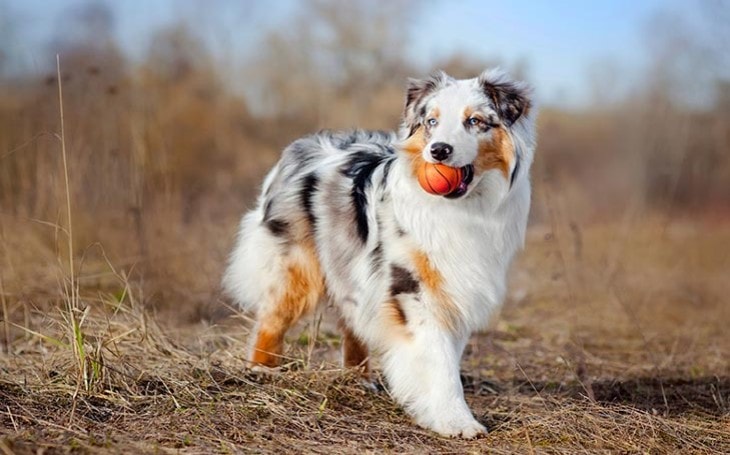
Australian Shepherds, often called Aussies, are medium-sized herding dogs developed in the western United States, not Australia. They are intelligent, affectionate and energetic, but those qualities also mean they need consistent, humane training and plenty of mental and physical activity.
An Aussie is not automatically well behaved just because the breed is smart. Reward-based training, early socialization, clear household rules and breed-appropriate enrichment are what help an Australian Shepherd become a comfortable companion.
When to Start Training Your Aussie
Start as soon as your puppy comes home, but keep training age-appropriate. A 4-5-week-old puppy is generally still with the mother and littermates and is too young for formal obedience training. Most puppies go to their new homes around 8 weeks or later.
With a young puppy, focus on gentle handling, name recognition, toilet routines, safe socialization and simple reward-based cues such as sit and come. Short sessions, often just a few minutes, are more suitable than long drills. Ask your veterinarian about the right time for puppy classes and how to balance socialization with vaccination safety.
Where to Start Training Your Aussie
Begin at home, in a safe enclosed yard, or in another low-distraction space. Your Aussie is learning from the moment it arrives: it notices what earns attention, food, play or access to the garden. Reward the behavior you want and manage the environment so unwanted habits do not get practiced.
Before formal classes, you can teach everyday skills such as coming when called, settling on a mat, waiting at doors and walking on a loose lead. Once your veterinarian confirms your puppy’s vaccination status and a suitable class is available, a reputable puppy kindergarten or obedience class can help with controlled socialization and foundation skills.
Dog parks are not the best first training environment. Crowded, unpredictable spaces can overwhelm a young or sensitive Aussie. Choose calm, structured settings and build up distractions gradually.
How to Teach a Task to Your Aussie
Teaching a task is easier when you break it into small steps. Decide what the finished behavior looks like, then reward the closest version your dog can offer. For example, to teach a recall, start in a quiet room, reward a few steps toward you, then practice with mild distractions before trying it in the garden.
You can demonstrate or lure a behavior, but do not rely on pushing or forcing your dog into position. Food, toys and praise can all work as rewards. If your Aussie seems stubborn, consider whether the task is too hard, the environment is too distracting, or the reward is not valuable enough. Confusion and stress often look like stubbornness.
Training Process
These training areas are useful foundations for an Australian Shepherd. Keep sessions positive, brief and adjusted to your dog’s age and experience.
Obedience Training
Good obedience training teaches practical skills such as focus, recall, loose-lead walking, waiting, settling and polite greetings. It should also help your dog learn to cope with distractions and to make good choices around people and other dogs. Look for a trainer who uses reward-based methods, explains the reasoning behind exercises, and avoids harsh corrections or equipment that causes pain or fear.
Leadership Without Dominance
The old alpha dog or dominance model is not a reliable guide to living with a pet dog. Australian Shepherds do not need to be dominated, rolled onto their backs or physically corrected to respect their owner. Leadership means providing consistent routines, fair rules, safe exercise, mental work and clear rewards for the behavior you want.
Adolescent Aussies may test boundaries, become more distractible or need more practice with impulse control. That is normal development, not a sign that your dog is trying to take over. Respond with patience, management and more training practice.
Clicker Training
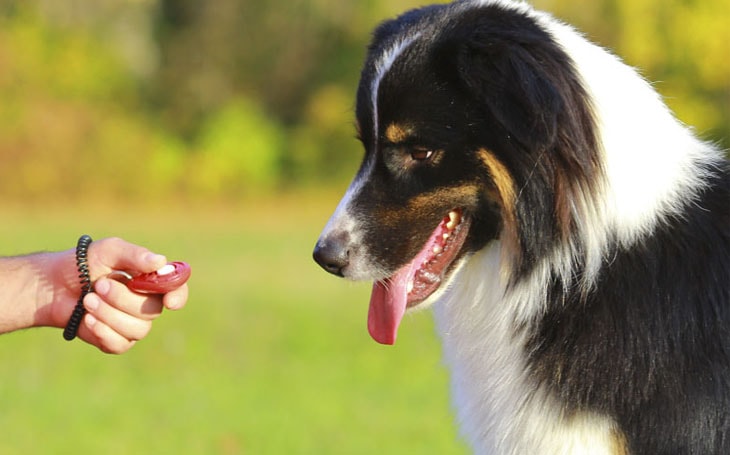
A clicker is a small device that makes a click sound. It is not an electric collar and it does not produce a bell, alarm or shock. The click marks the exact moment your dog did the right thing, and it is followed by a reward such as food or a toy. You can also use a word like yes as a marker instead of a clicker.
Start by pairing the click with treats in a quiet place so the sound predicts something good. Then click and reward small steps toward the behavior you want. Keep sessions short and avoid using the clicker to signal punishment.
Strategies and Techniques for Easier Australian Shepherd Training
These habits make training clearer for both you and your dog.
Go Slow
Do not pile on several new commands and expect your Aussie to remember them all in one day. Teach one small step at a time and reward success. If your dog is getting it wrong often, make the task easier rather than repeating it harder.
Be Gentle and Consistent
Australian Shepherds are often sensitive to tone and body language. Harsh handling, shouting or rough corrections can make training harder and damage trust. Be calm, clear and consistent, and reward the behavior you want. If your dog is fearful, reactive or struggling with a specific issue, seek help from a qualified reward-based trainer or veterinary behavior professional rather than escalating punishment.
Make Training a Habit
Dogs learn through repetition and practice in different places. Short daily sessions are usually more effective than occasional long ones. Practice in the kitchen, garden, on a quiet walk and around mild distractions so your Aussie can generalize the skill.
Give the Herding Brain a Job
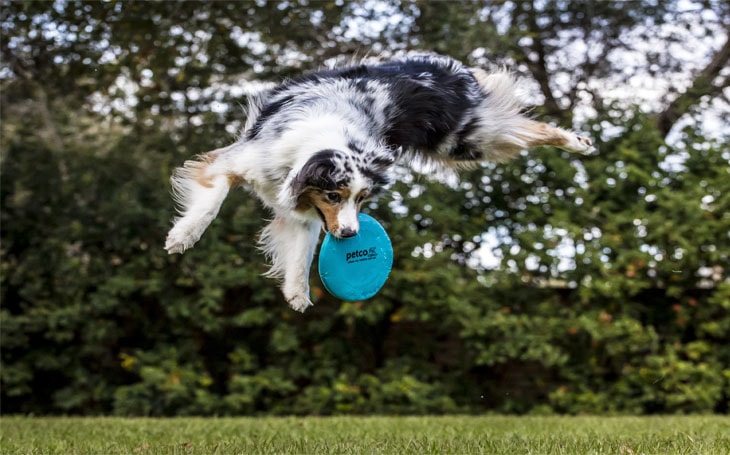
Australian Shepherds were bred to work, so they need more than a walk. Puzzle feeders, trick training, scent games, safe herding-style toys and supervised time to explore can help meet their mental needs. Keep exercise appropriate for your dog’s age and health, and avoid activities that encourage chasing children, cyclists or cars.
If your Aussie nips, herds family members or becomes overexcited, manage the situation and teach an alternative behavior, such as going to a mat or carrying a toy. Repeated nipping or any bite should be taken seriously; ask a veterinarian or qualified behavior professional for advice.
Training an Australian Shepherd is not about proving who is in charge. It is about teaching useful skills, rewarding good choices and giving a clever, active dog enough appropriate work to do. Be patient, keep sessions short and consistent, and adjust the plan to your individual dog.
For more dog-training content, visit Doglime.