Jackabee at a glance
About the breed
Personality and traits out of 5
Friendliness and suitability
Last updated: October 22, 2026
The Jackabee is what you get from a beagle crossed with jack russell terrier parents. Both parents were bred to hunt. Both follow scent, chase small animals, and argue with recall. Mix them, and you should expect a busy dog in a small body.
That mix can suit you well, if your days are active. It will test you if you wanted a quiet lap dog. This guide covers size, temperament, exercise, grooming, health, and family fit. It uses parent breed figures from kennel clubs and vets, because the mix itself has no official standard.
Quick facts
| Trait | Jackabee |
|---|---|
| Parent breeds | Jack Russell Terrier and Beagle |
| Height | Between the parents: about 10 to 15 inches at the shoulder (see Sources) |
| Weight | Between the parents: about 9 to 30 pounds, most in the middle of that span (see Sources) |
| Lifespan | About 10 to 15 years, based on the parent breeds (see Sources) |
| Coat | Short and dense; smooth or slightly broken, depending on the parent it favours |
| Energy | High — two hunting breeds, not a couch mix |
| Good with children | Often yes, with supervision and training (see family section) |
| Recognition | Not recognised as a breed by the AKC; it is a cross, not a pedigree breed |
Those ranges are honest, not precise. Your dog can land outside them. A mix gives you a range, never a promise.
What is a Jackabee?
A Jackabee is a first-generation or later cross between two hunting breeds. One parent is a Beagle, a scent hound bred to track hare in packs. The other is a Jack Russell Terrier, bred to chase foxes and go to ground after them. You may also see the cross written as a beagle cross with jack russell, or spelled Jack-A-Bee. Compare its Jack Russell cousins in our Jack Chi guide and Chihuahua Terrier mix guide.
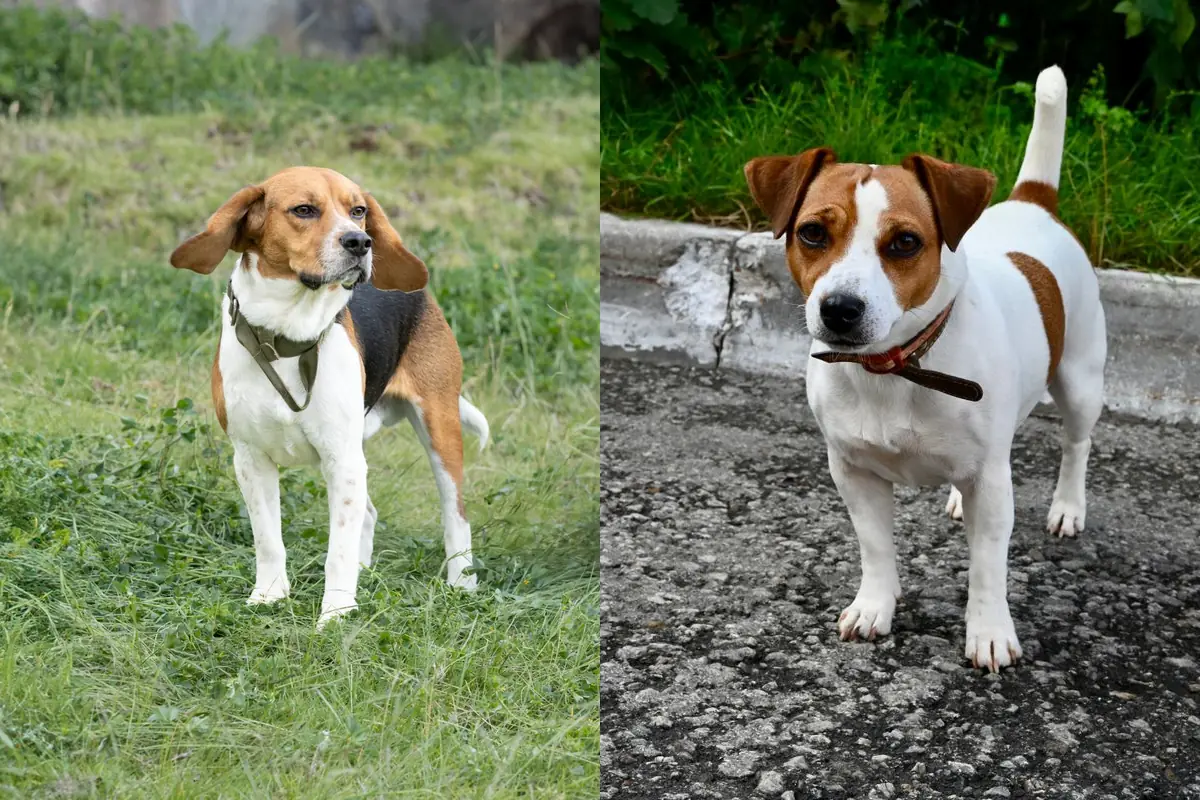
There is no breed standard for the mix. The American Kennel Club (AKC) registers the parent breeds, not the cross. A pedigree Beagle breeder works to a written standard. A Jackabee breeder does not have one to work to.
So ask harder questions before you pay or adopt. Ask to meet both parents, or at least the mother. Ask which health tests the parents have had.
My honest take: the parents tell you more than the puppy does. Judge the litter by them.
Size and appearance
Start with the parents, because they set the frame. The AKC lists Beagles in two varieties: 13 inches and under, and 13 to 15 inches. Their weights run under 20 pounds for the smaller variety. They run 20 to 30 pounds for the larger one, per the AKC Beagle breed page.
The Jack Russell side is smaller and lighter. The AKC’s Parson Russell Terrier, the taller Jack Russell type, stands about 14 inches for males and 13 inches for females. It weighs 13 to 17 pounds, per the AKC Parson Russell Terrier breed page. The shorter Russell Terrier stands 10 to 12 inches and weighs 9 to 15 pounds, per the AKC Russell Terrier breed page.
Put those together and you get the Jackabee span in the quick facts table. Most dogs land somewhere in the middle. A puppy from a small Russell parent can stay quite small. A puppy from a larger Beagle parent can surprise you.
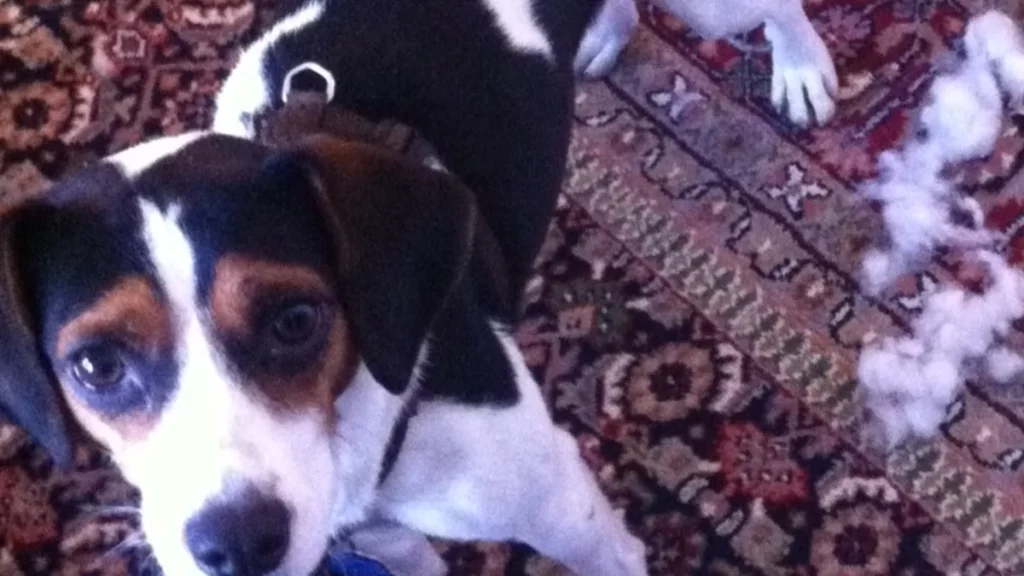
Looks vary just as much. Many Jackabees keep a Beagle-shaped head and longer ears. Others look more terrier, with a shorter muzzle and ears that fold forward. Coats are usually short, in white with tan, black, or tricolour patches.
You cannot order a set look from a cross, so do not pay extra for one.
Temperament
The jack russell terrier and beagle temperaments blend, but they do not cancel out. From the Beagle side, expect a merry, sociable dog who likes company — our Beagle temperament and personality guide covers that side in depth. The AKC describes Beagles as bred to hunt in packs, so they enjoy people and other dogs. From the terrier side, expect boldness, speed, and strong opinions; our Jack Russell Terrier behaviour guide digs into those.
VCA Hospitals describes Jack Russells as bold, watchful, busy, independent, and mischievous. VCA also notes they can be scrappy with other dogs. They may not suit homes with small pets, especially rodents. That warning applies to your Jackabee too, until you know your own dog.
Noise is part of the package. Beagles bark and bay, and some Jackabees inherit the full soundtrack. Jack Russells can also bark a lot, and VCA advises discouraging it early. If you live in a thin-walled apartment, think hard about that mix of voices.
Affection is real, though. These dogs tend to attach closely and follow their people around. A bored Jackabee will invent work, and you rarely approve the project.
Exercise, training and the hunting instinct
Plan your day around this dog, not the other way round. VCA says a Jack Russell’s exercise needs are met with a long walk or run, plus several vigorous games. VCA adds a chance to sniff and explore, on a leash or somewhere safe. Your Jackabee needs the same pattern: a proper walk, hard play, and sniffing time.
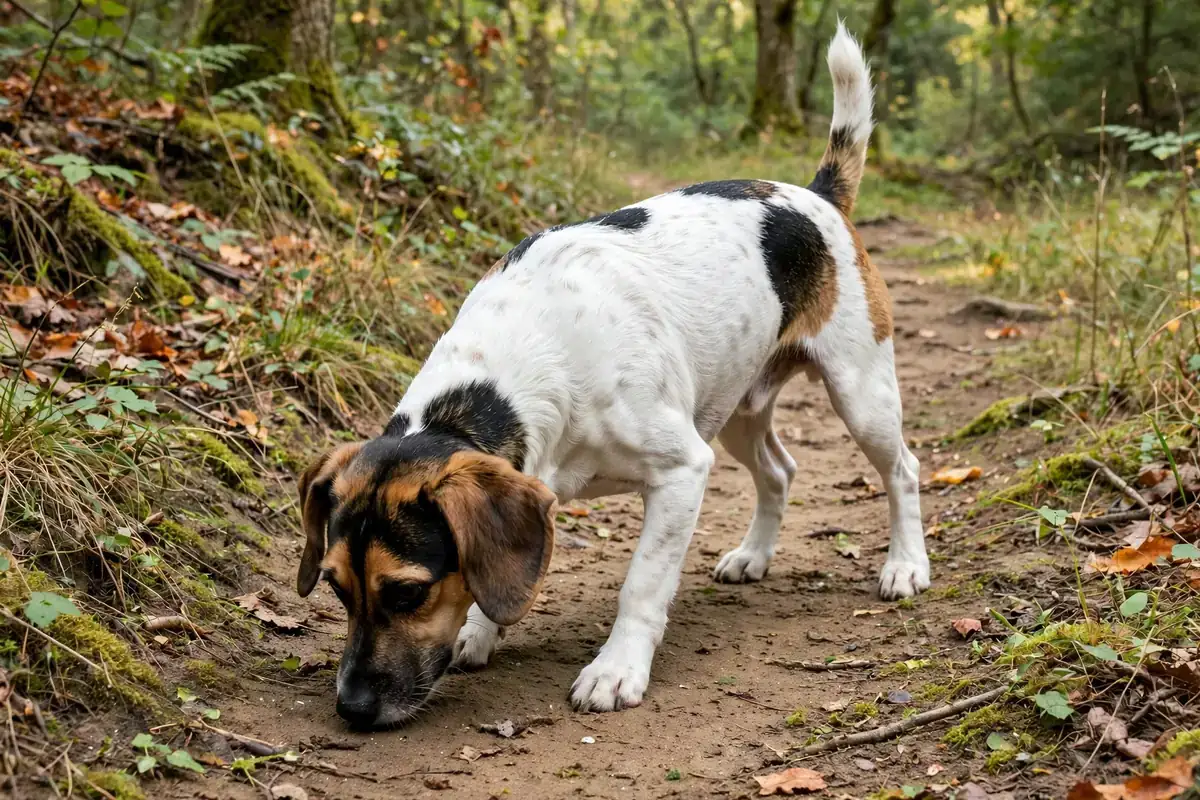
The Beagle side explains the sniffing. VCA’s Beagle profile says Beagles prefer to walk, sniff, and explore. It also warns they follow scent trails and may not come back when called.
That is the hunting instinct in plain terms. A scent can switch off your dog’s hearing in seconds.
So keep your Jackabee on a leash or inside a secure fence. Train recall early, reward it heavily, and still do not trust it near roads. One rabbit across a field can end the argument instantly. Fences need checking too, because terriers dig and Beagles wander.
Training works best with food rewards and short, varied sessions. VCA notes Jack Russells learn quickly but bore quickly. They do best with reward-based training that uses food or games. Keep sessions short, change the game, and end while your dog still cares.
Start socialising early, especially around other dogs and small animals. Supervise meetings with cats and pocket pets, always. Prey drive is not a training failure. It is the breed mix doing exactly what both parents were bred for.
Grooming and health
Grooming is the easy part of this mix. Both parent coats are short, and both need weekly brushing. The AKC says Beagles have smooth, dense double coats, and weekly grooming keeps them at their best. VCA gives the same weekly brushing advice for Jack Russells, smooth or broken coated.

Expect steady shedding, not a hair-free home.
Check the ears every week. Long, low-set ears trap moisture and dirt, whichever parent your dog favours. The Beagle grooming guides at Healthy Paws flag regular ear checks for exactly that reason. Clean, dry ears prevent most infections.
Nails, teeth, and weight need the same routine attention.
Health is where you stay alert, not alarmed. A mix can inherit problems from either parent breed. Healthy Paws lists Beagle concerns including hip dysplasia, epilepsy, luxating patella, and eye disorders. The list also includes hypothyroidism and intervertebral disc disease.
For the terrier side, VCA and breed sources flag eye problems, deafness, and patellar luxation.
Weight deserves its own warning. VCA notes Beagles love food and tend to become obese. A food-driven Jackabee can gain weight fast on terrier energy meals. Weigh meals, count treats inside the daily total, and check ribs monthly — our Beagle diet guide covers feeding the food-driven parent.
Ask breeders for parent health test results before you commit. Then keep up routine vet checks, so small problems get caught early. No test makes a mix risk-free, and any seller promising that is selling.
Is a Jackabee a good family dog?
For an active family, often yes. The AKC says Beagles are good with young children and thrive on companionship. VCA describes Jack Russells as playful and good with children too. A Jackabee from those lines can be a cheerful, sturdy playmate.
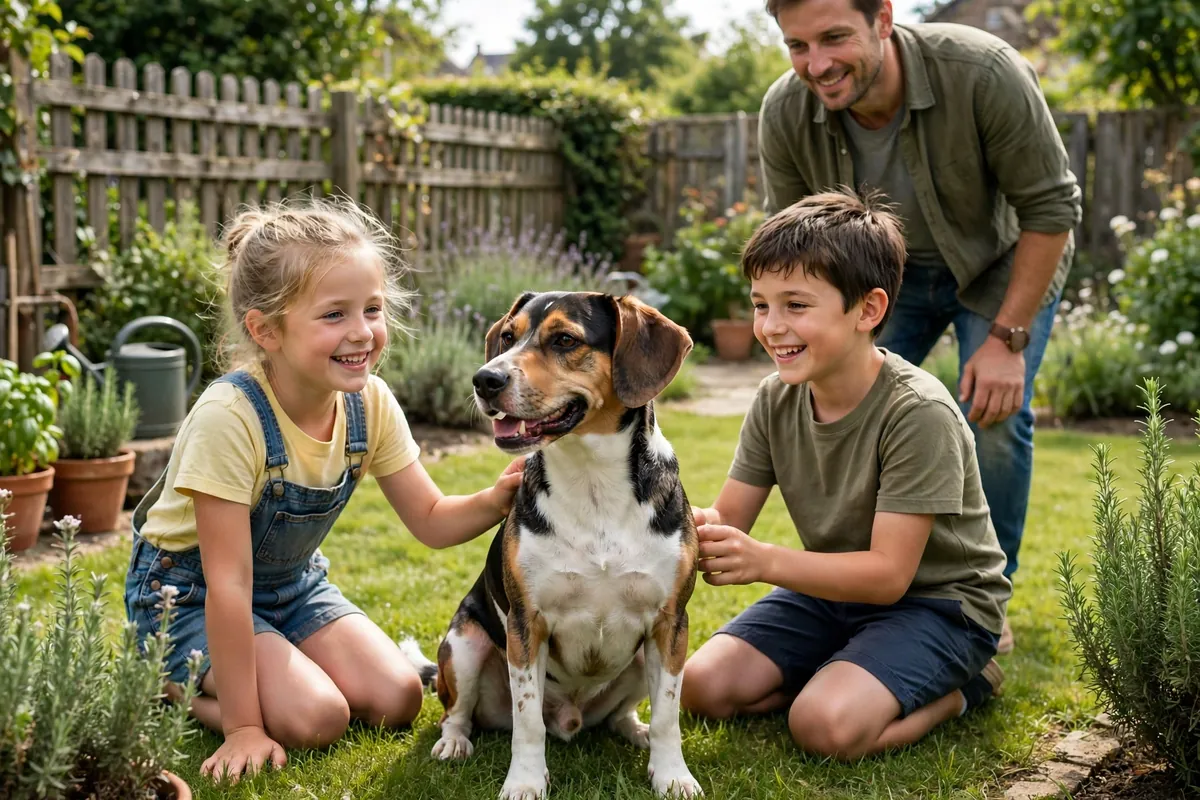
Children still need supervision, and the dog needs an escape from rough play.
For a quiet, away-all-day household, my answer is no. Both parents struggle with long hours alone. The AKC warns Beagles can turn destructive when left alone for long periods.
An under-exercised Jackabee will bark, dig, chew, or redecorate. That is not spite. It is an unemployed hunting dog.
Think about your smallest pets and your neighbours too. Prey drive makes unsupervised time with rabbits or guinea pigs unsafe. Baying makes close neighbours part of your decision. If either point worries you, this mix is probably the wrong fit.
Your next step is simple: meet the parents before you meet the puppies. Watch the mother’s recall, energy, and manners for an hour. Then decide with that dog in mind, not the sales photos.
Read our full Jack Russell Terrier breed guide for the terrier parent in detail. Our Beagle breed guide covers the hound side, from baying to feeding. If a puppy is your plan, our Beagle puppies guide covers the first months at home.
FAQ
A Jackabee is a cross between a Jack Russell Terrier and a Beagle. Both parents are English hunting breeds, so the mix is energetic and scent-driven. It is a crossbreed, not an AKC-recognised breed, and individual dogs vary a lot.
Expect a dog between its parents in size. The parents span about 10 to 15 inches and 9 to 30 pounds in the AKC figures. Most Jackabees land in the middle of that span. Your breeder’s parent sizes are your best guide.
Plan around the parent lifespans. The AKC lists 10 to 15 years for Beagles and 13 to 15 years for Parson Russell Terriers. A healthy Jackabee may fall inside that combined range. Diet, weight, and vet care all shift the outcome.
Often, yes, with supervision and training. Beagles score well with young children, and Jack Russells are playful with children, per the AKC and VCA. Teach children calm handling, and give the dog space to walk away. Never leave young children and dogs unsupervised.
Many do. Beagles bark and bay, and Jack Russells can be vocal too. Training from an early age helps, and enough exercise helps more. If you need a quiet dog for thin-walled housing, choose a different mix.