Ringworm on Dogs’ Belly: Symptoms, Pictures & Treatment
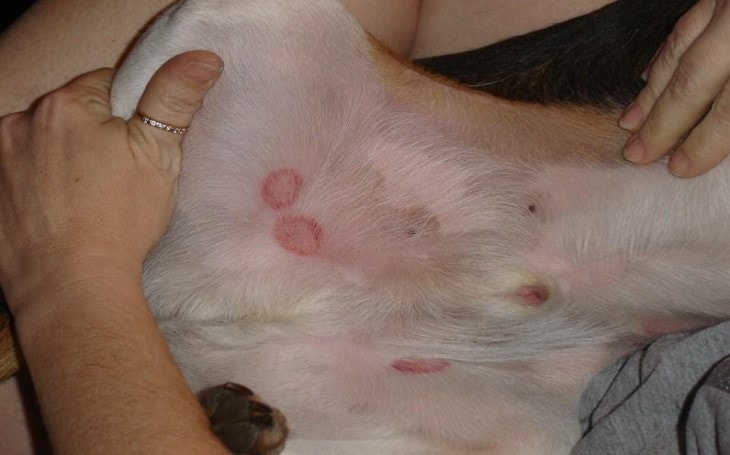
Ringworm on a dog’s belly may appear as one or more areas of hair loss with flaky, scaly, red, or crusty skin. Despite its name, ringworm is a fungal infection (dermatophytosis), not a worm or a virus. Similar-looking patches can have other causes, so photographs alone cannot confirm ringworm. Ask your veterinarian to examine a new, spreading, or persistent skin lesion.
Quick answer: A suspicious belly patch needs a veterinary diagnosis. Treatment may involve veterinarian-prescribed antifungal products, sometimes oral medication, and cleaning of contaminated hair and surfaces. Ringworm can spread to people and other pets, so follow your veterinary team’s instructions about contact precautions.
What does ringworm look like on a dog’s belly?
Possible signs include circular or irregular bald patches, broken hairs, scaling, crusts, and pink or reddened skin. Some dogs have several spots; other dogs have subtle changes or no obvious symptoms. Itching can occur, but ringworm is not always itchy. The belly is one possible location—not the only site or necessarily the most common one.
Other conditions, including bacterial skin infections, mites, allergies, and irritation, can resemble ringworm. A photo can help you describe what you see, but it should not be used to diagnose your dog.
How veterinarians diagnose ringworm
A veterinarian may examine the skin and hair and use one or more tests, such as microscopic examination, fungal culture, or a PCR test. A special Wood’s lamp can help locate some infected hairs, but a negative lamp examination does not rule out ringworm. Your veterinarian will select tests based on the appearance of the lesions and the dog’s history.
How is ringworm in dogs treated?
Treatment depends on how extensive the infection is, the dog’s overall health, and the test results. A veterinarian may prescribe topical antifungal therapy for the coat and skin, and oral antifungal medication when appropriate. Treatment is intended to control the infection and reduce exposure of other animals and people. Do not start human antifungal medicines, oral drugs, essential oils, or household chemicals on your dog without veterinary direction.
Do not stop a prescribed treatment just because the visible patch looks better. Your veterinarian may recommend repeat testing or follow-up to confirm that the infection has cleared. Many cases require several weeks of care, and the duration varies.
Can ringworm spread from a dog to a person?
Yes. Ringworm is zoonotic, meaning it can pass between animals and people. Transmission can occur through contact with infected skin or hair, and sometimes contaminated grooming tools, bedding, or surfaces. Exposure does not always result in infection. Young children, people with weakened immune systems, and other pets may need additional precautions. Wash hands after handling an affected dog; seek medical advice if a person develops a suspicious rash.
Cleaning your home during treatment
- Follow your veterinarian’s instructions about temporarily separating affected pets from others while still providing normal care and social interaction.
- Remove shed hair from floors, soft furnishings, and grooming equipment with a vacuum or suitable cleaning tools.
- Wash bedding and washable fabrics thoroughly. Clean hard surfaces with detergent before using an appropriate disinfectant according to its label.
- Avoid applying bleach, disinfectants, or essential oils to your dog’s skin. Keep pets away from cleaning products until surfaces are safe.
Can ringworm be prevented?
Promptly assess suspicious skin patches, avoid sharing grooming equipment between affected and unaffected animals, and routinely clean pet bedding and grooming tools. Good hygiene helps, but ringworm is not proof of poor care: dogs can acquire fungal spores through contact with infected animals or contaminated materials.
When should you call the veterinarian?
Arrange a veterinary visit when you notice unexplained hair loss, scaly patches, spreading lesions, or recurrent skin problems. Seek prompt advice if the skin is painful, oozing, very inflamed, or your dog seems unwell. Tell the clinic if household members or other pets have similar lesions.
Frequently asked questions
Can I treat ringworm on my dog’s belly with home remedies?
Do not rely on apple cider vinegar, coconut oil, tea tree oil, or other home remedies to clear a suspected ringworm infection. Some products can irritate skin, and tea tree oil can be toxic to dogs. Ask a veterinarian about proven antifungal treatment.
How long does ringworm take to heal in dogs?
Recovery varies. Treatment and follow-up commonly continue for several weeks, sometimes longer. A patch looking better does not necessarily mean the fungal infection has cleared; follow your veterinarian’s plan.
Can a dog have ringworm without a circular rash?
Yes. Lesions do not always make a neat ring, and some dogs have only broken hairs, scaling, or patchy hair loss. Diagnostic testing is needed when ringworm is suspected.
Is belly ringworm contagious?
Yes, it can spread to other animals and humans, especially through contact with infected hairs or skin. Ask your veterinarian about isolation, cleaning, and when normal contact can resume.
Veterinary references
- Merck Veterinary Manual: Dermatophytosis in Dogs and Cats (reviewed February 2025).
- VCA Animal Hospitals: Ringworm in Dogs.
- Merck Veterinary Manual: Ringworm in Dogs (pet-owner version).
Editorial note: This article provides general educational information and does not replace an examination by a veterinarian. Veterinary review of this Doglime article is pending; no clinician has been attributed as a reviewer.