1 Month German Shepherd Puppies: Growth to 2 Months & Beyond

Last updated: October 21, 2026
Your search for 1 month German Shepherd puppies usually starts with one worry: is my puppy growing right? This guide walks you through each stage, month by month, with cited weights, behavior changes, and clear training start points. No guesswork, and no padded numbers.
A Shepherd puppy changes fast. Eyes open in the first weeks. Confidence builds over months, not days. Knowing what comes next helps you feed, socialize, and train at the right time.
| Quick facts | Detail |
|---|---|
| Adult height | Males 24–26 inches; females 22–24 inches (AKC breed page) |
| Adult weight | Males 65–90 pounds; females 50–70 pounds (AKC breed page) |
| Ready to leave mother | 7–10 weeks, depending on breed and maturity (VCA Hospitals) |
| Sensitive socialization period | 3–16 weeks (VCA Hospitals) |
| Adult maturity | May not arrive before 2–3 years of age (AKC GSD training timeline) |
German Shepherd puppy at 1 month
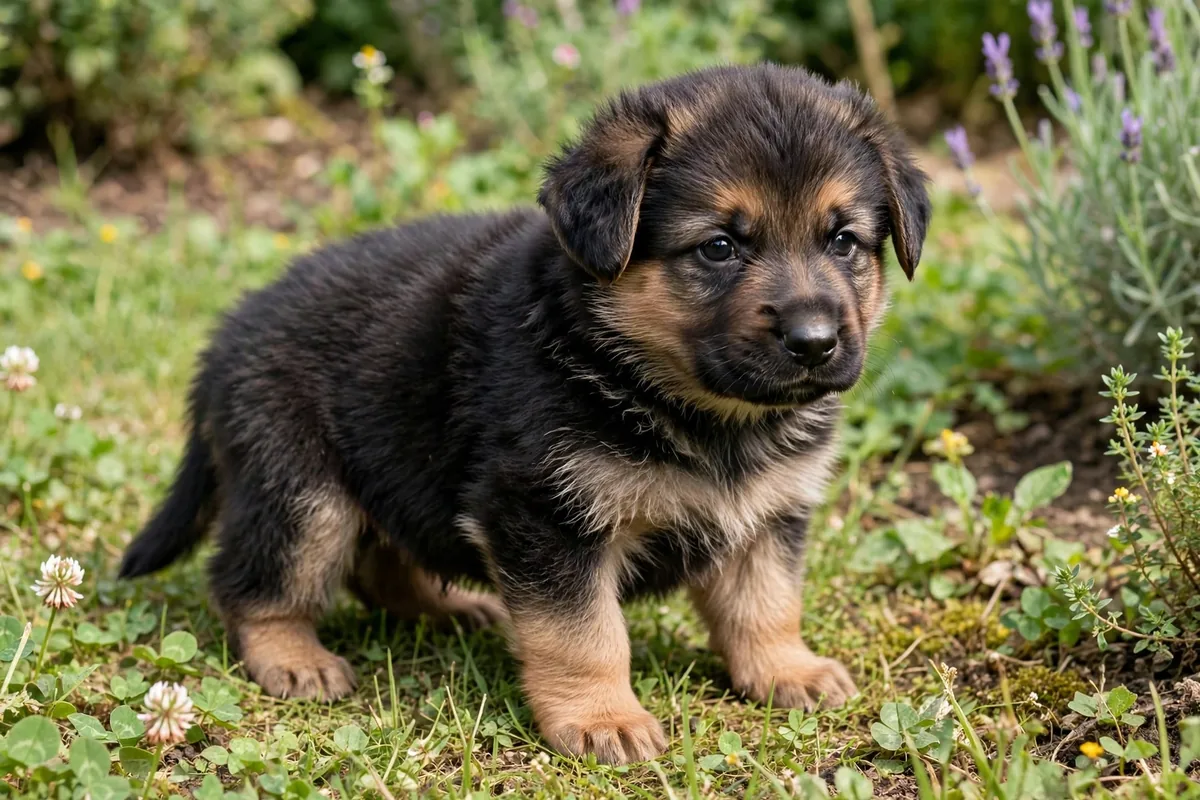
At one month, your puppy should still be with the breeder, its mother, and its littermates. This isn’t dead time. The foundations are being laid right now.
The AKC’s guide to early puppy training notes that a puppy’s eyes and ears normally open at 10 to 13 days of age. By four weeks, most puppies walk, wobble through early play, and start sampling solid food. Weaning is a process, not a single day.
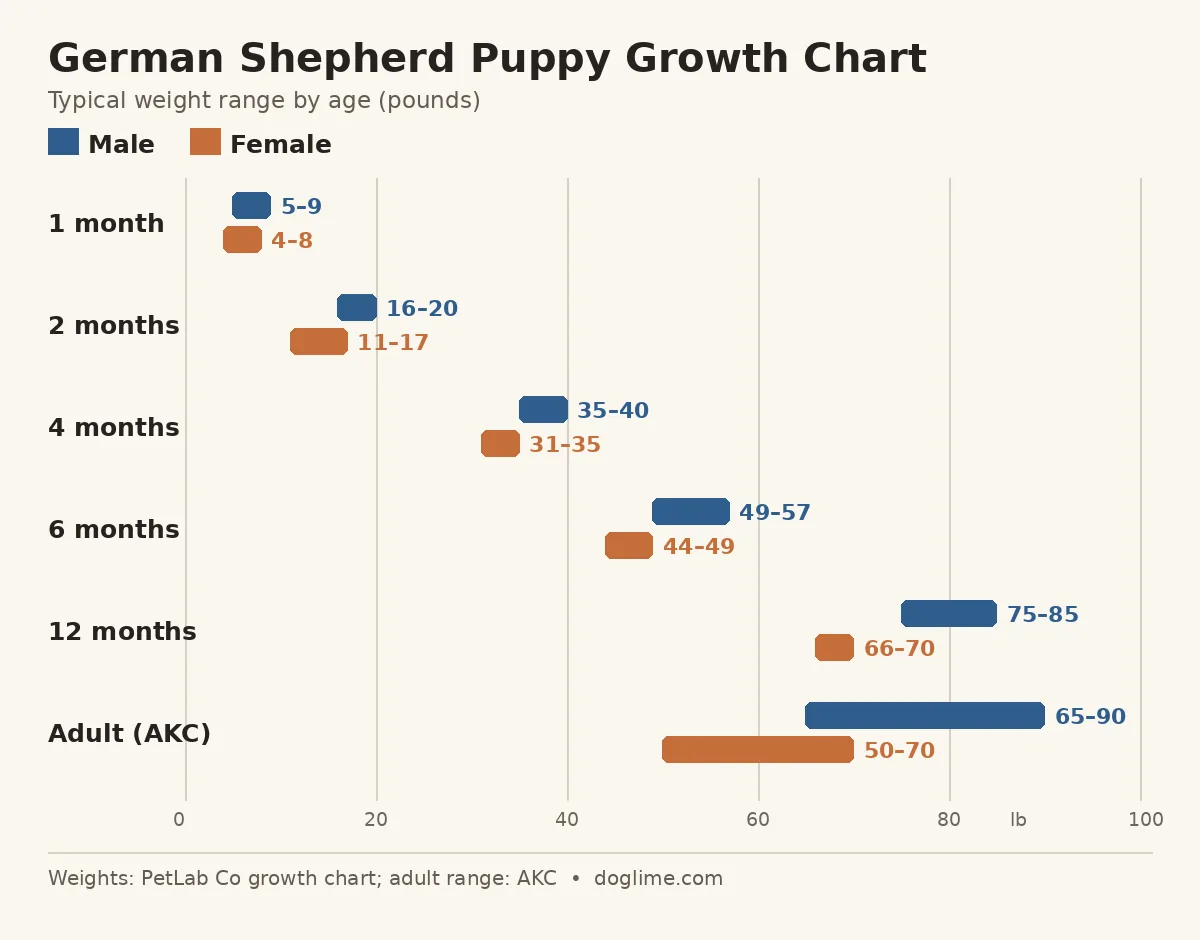
Weight gives you a rough check, nothing more. The PetLab Co growth chart, published with veterinary consultant input, puts males at 5–9 pounds at one month, and females at 4–8 pounds. A puppy slightly outside that range isn’t automatically a problem. A puppy who stops gaining is a vet visit.
Handling matters early, too. VCA Hospitals explains that puppies handled from birth to five weeks tend to grow up more confident. So ask your breeder one direct question: how much are these puppies handled each day? My view is simple: a quiet, handled litter beats a flashy advert every time. For a lighter moment from the newborn stage, one Shepherd litter even produced a green puppy — our story of Reba’s green puppy explains how.
German Shepherd puppy at 2 months
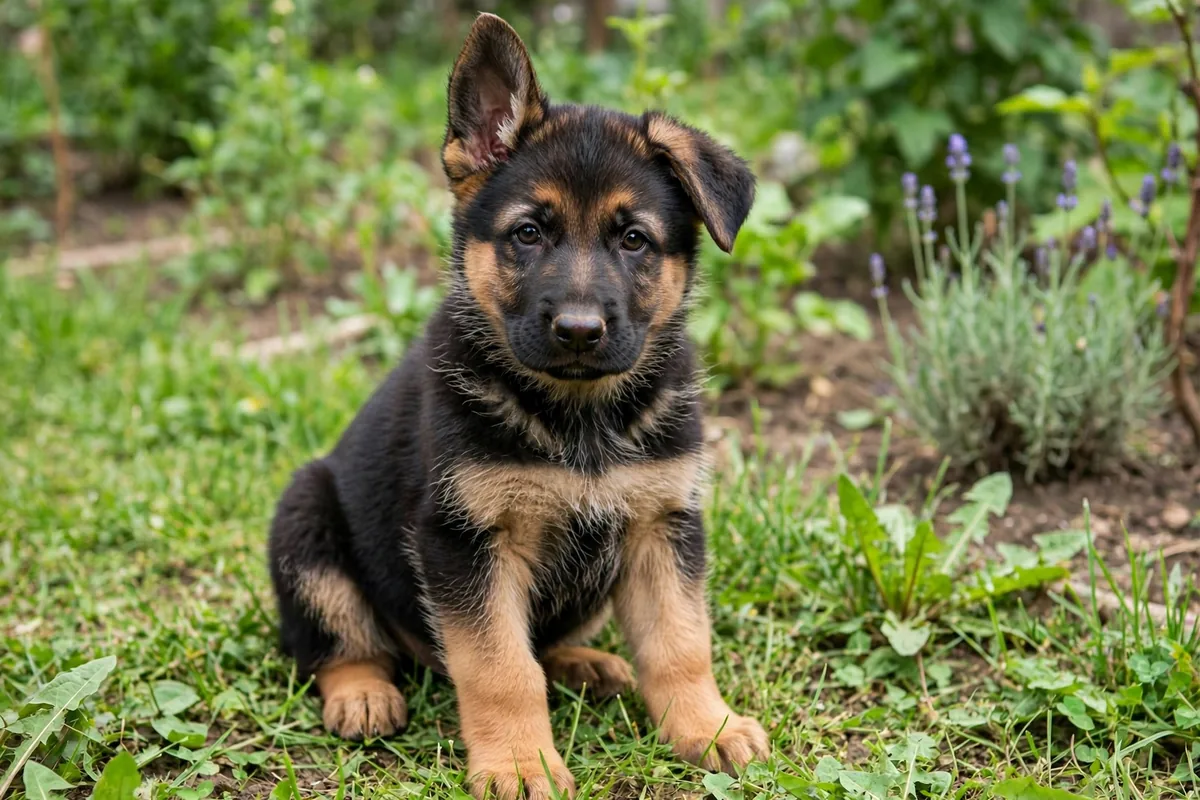
A German Shepherd puppy at 2 months is usually ready to come home. The same chart puts males at 16–20 pounds at two months, and females at 11–17 pounds. You’ll feel that weight. Carrying one up the stairs stops being a one-hand job.
When can a puppy leave its mother? VCA Hospitals advises that puppies remain with their mother and littermates until they are 7–10 weeks of age. Those weeks teach bite inhibition and basic dog manners.
The AKC’s German Shepherd timeline also starts at 8 weeks, when puppies typically move to their new homes. If a seller offers you a puppy younger than that, walk away. I’d rather wait two weeks than spend two years fixing fear problems.
Timing needs care for another reason. The AKC places the first fear period at 8–11 weeks. Your puppy may spook at things it ignored yesterday. Keep the first days calm, let it approach new things at its own pace, and don’t force greetings.
3 to 6 months
Growth speeds up here, and so does the chewing. The PetLab Co chart puts males at 35–40 pounds at four months, and females at 31–35 pounds. At six months, males reach 49–57 pounds, and females reach 44–49 pounds. That’s a big dog arriving in a still-young body.
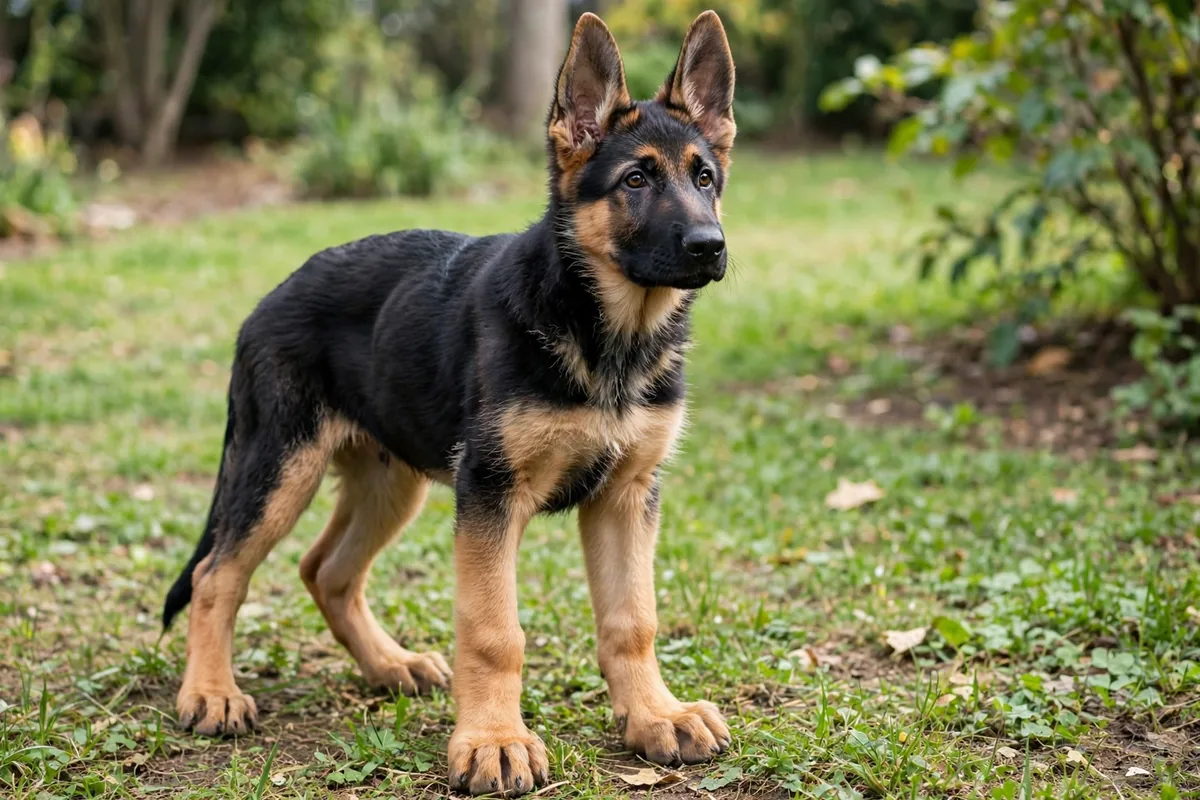
Don’t waste this window. The AKC warns that the German Shepherd socialization window closes at 12 to 16 weeks. Safe, positive exposure has to happen before that door shuts. Let your puppy meet different people, hear household noises, and walk on different surfaces.
Baby teeth give way to adult teeth during these months, so chew toys stop being optional. Redirect, don’t scold. A puppy chewing your skirting board is telling you it needs something legal to chew.
Feed for steady growth, not maximum growth. Extra weight loads growing joints, and Shepherds don’t need that risk. Weigh your puppy monthly, and check its ribs with your hands between weigh-ins. Our German Shepherd diet guide covers what goes in the bowl at each life stage.
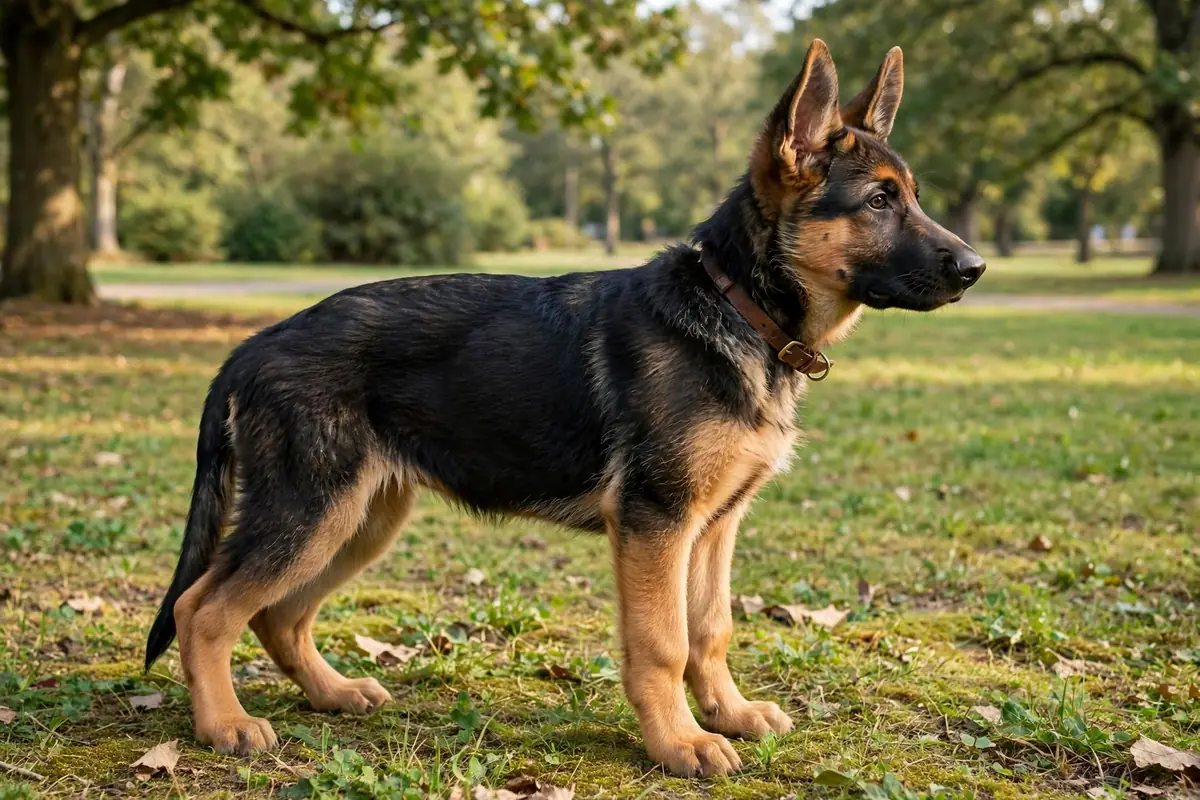
6 to 12 months
Your puppy now looks almost grown, but it isn’t. The chart puts males at 75–85 pounds at twelve months, and females at 66–70 pounds. Both figures sit inside the AKC adult ranges in the quick facts table above. But size and maturity are different things.
The AKC states plainly that a German Shepherd may not reach adult maturity before two or three years. Males usually take longer than females. VCA Hospitals describes adolescence as running from 6 to 18 months. Expect selective hearing, and expect boundaries to get tested at the park gate.
Watch for the second fear period, too. The AKC places it at 6–14 months. A confident youngster can turn wary of a harmless object overnight. Don’t drag it closer; give it space, reward calm looks, and keep sessions short.
Keep training through this stage, even when progress wobbles. The AKC also flags 9 to 24 months as the period to move from puppy food to adult food. Ask your vet about timing for your own dog.
Behavior changes by age
Behavior follows a pattern, even if your puppy improvises around the edges. This table pulls the stages above into one view.
| Age | What changes | What you should do |
|---|---|---|
| 0–2 weeks | Sleeps and nurses; eyes and ears still closed | Leave the litter with its mother; breeder handles checks |
| 2–4 weeks | Eyes and ears open at 10–13 days; first steps and play | Breeder starts gentle handling and new sounds |
| 1 month | Walking, playing with littermates, first solid food | Ask the breeder about handling and weaning progress |
| 2 months | Moves home; first fear period runs 8–11 weeks | Start housetraining and crate work; keep exposure calm |
| 3–6 months | Socialization window closes at 12–16 weeks; heavy chewing | Begin sit, down, stay, and recall; provide legal chew toys |
| 6–12 months | Adolescence begins; second fear period runs 6–14 months | Keep training consistent; give space during wary phases |
One honest warning: individual puppies vary. A shy puppy isn’t broken, and a bold one isn’t finished. Use the stages as a map, not a report card.
When to start training
Start the day your puppy comes home. Not with drills. With the basics that shape daily life.
From 8 to 16 weeks, the AKC’s German Shepherd timeline puts socialization first, with crate training and housetraining alongside it. Teach your puppy its name, reward it for checking in with you, and keep everything short. One AKC trainer quoted in that guide recommends short, fun, three-minute games spread through the day. That rhythm works, because puppies learn in small doses.
From 3 to 9 months, the same timeline moves you into basic obedience. Teach sit, down, and stay. Build recall early, because a reliable come-back can save your dog’s life one day. Add impulse control: sit before meals, sit before doors open.
Here’s my take: don’t wait for a badly behaved six-month-old before you start. Shepherds learn fast, and that cuts both ways. The habits you build at ten weeks are the ones you’ll live with at two years.
Your next step is one weigh-in. Weigh your puppy this week, write the figure down with its age, and compare it with the cited range for its sex. If it’s off track twice in a row, book a growth check with your vet.
Read our German Shepherd breed guide for the full breed picture. Our German Shepherd behavior and temperament guide explains the adult character you’re raising. Our German Shepherd training guide walks through the next skills to teach. If you’re comparing crosses instead, our German Shepherd mix guide runs through the common ones, and our Gerberian Shepsky guide covers the Husky cross in size and care.
FAQ
A 1 month German Shepherd puppy typically weighs 5–9 pounds if male and 4–8 pounds if female, according to the PetLab Co growth chart. Treat those figures as a guide, not a pass mark. Steady gain matters more than one weigh-in. Ask your vet if your puppy stalls or drops.
A German Shepherd puppy at 2 months weighs 16–20 pounds if male and 11–17 pounds if female, according to the PetLab Co growth chart. Genetics and litter size shift the figure either way. Check body condition with your hands, not just the scale.
A German Shepherd puppy should stay with its mother and littermates until at least 7–10 weeks of age, according to VCA Hospitals. Most puppies go home at about 8 weeks. Leaving earlier can cost your puppy bite inhibition and confidence. Never accept a puppy offered younger than that range.
There is no official week for this, and no kennel club standard sets one. Ear timing varies a lot between puppies, even within one litter. Ears often lift, flop, and lift again while a puppy grows and teethes. If one ear still hasn’t risen late in the first year, ask your vet to check it.
Start training the day your puppy comes home, at about 8 weeks. Begin with socialization, crate time, housetraining, and its name. Move to sit, down, stay, and recall from about 3 months, following the AKC timeline. Keep sessions short, frequent, and positive.
1 comment