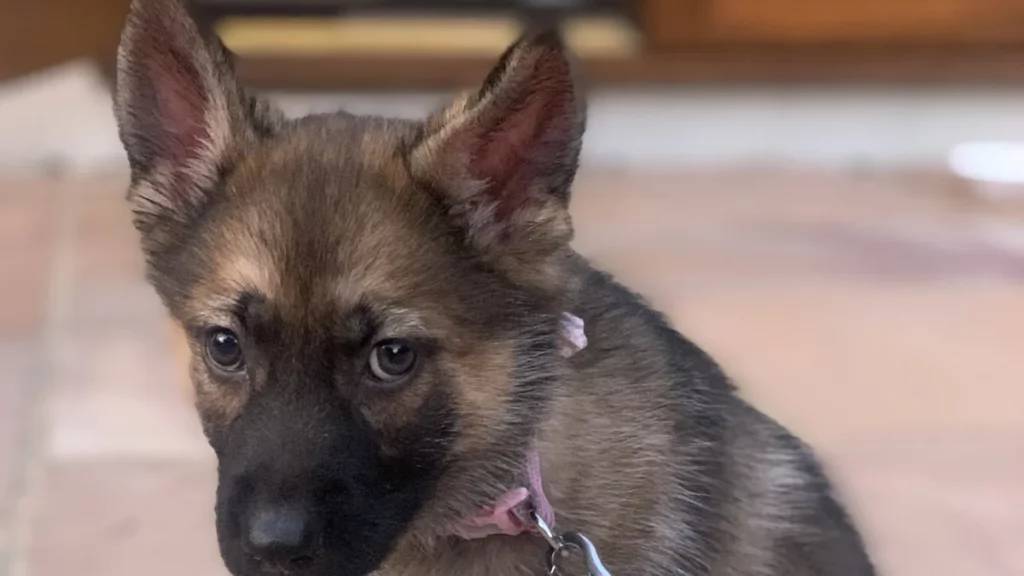
Gerberian Shepsky at a glance
About the breed
Personality and traits out of 5
Friendliness and suitability
Last updated: October 24, 2026
German shepherd husky mix size is the first thing to get right, because it decides everything else. A Gerberian Shepsky is a large, high-energy cross of a German Shepherd and a Siberian Husky. You’ll need space, daily exercise, and a real tolerance for loose hair.
This guide gives you honest ranges from the two parent breeds. No mix comes with a guarantee.
Quick facts
| Fact | Gerberian Shepsky |
|---|---|
| Parent breeds | German Shepherd Dog and Siberian Husky |
| Height | About 20 to 26 inches, from the AKC parent standards |
| Weight | About 35 to 90 pounds across the parent ranges |
| Coat | Double coat, medium length, from both parents |
| Eye colors | Brown, blue, one of each, or parti-colored, from the Husky side |
| Exercise | At least 2 hours a day (PDSA minimum for both parents) |
| Shedding | Heavy all year, heavier in spring and autumn |
| Lifespan | No set figure; plan for 10 years or more |
What is a Gerberian Shepsky?
A Gerberian Shepsky is a cross between a German Shepherd Dog and a Siberian Husky. You’ll also see it searched as a mix breed husky and german shepherd, a shepherd mix husky, or a siberian husky shepherd.
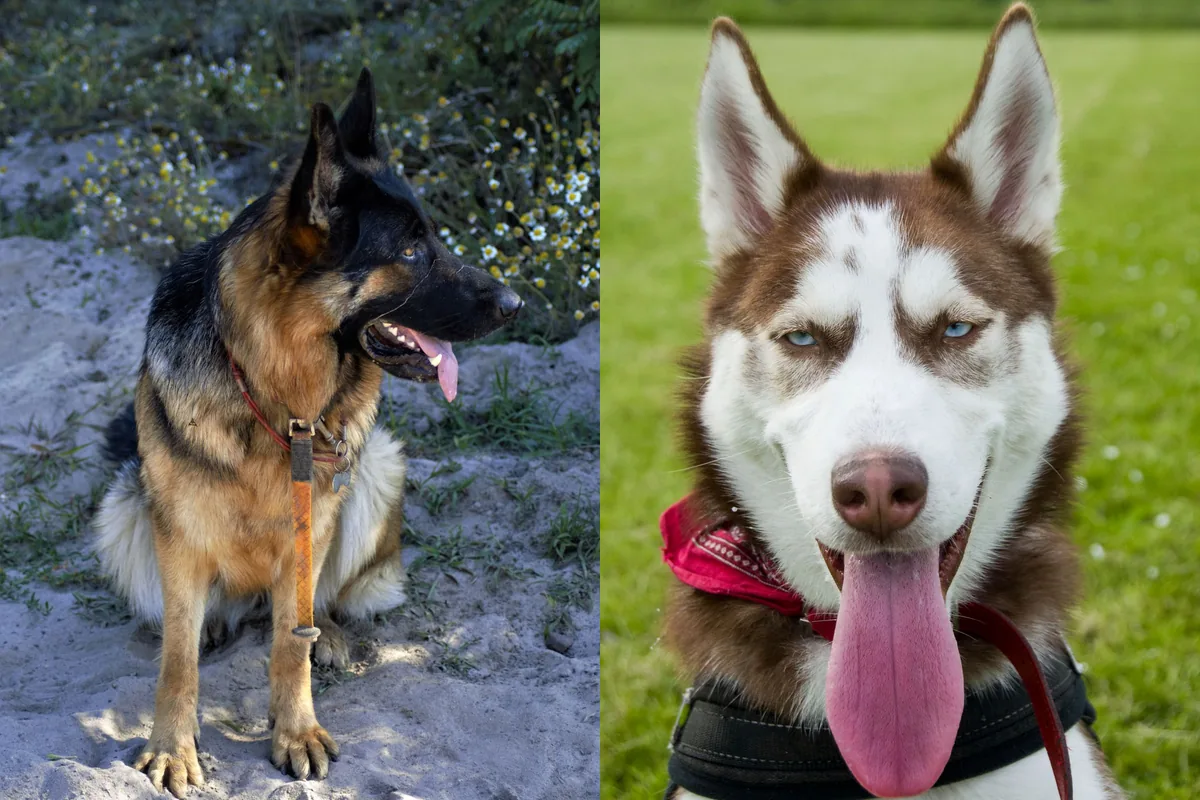
It isn’t a recognised breed with its own standard. The AKC recognises the two parents, not the cross. So there’s no set size, coat, or temperament to breed toward.
A first-generation puppy has one parent of each breed. A later-generation Shepsky can lean much harder toward either side. Two puppies from one litter can grow up quite differently.
Both parents are working dogs. The Shepherd brings herding instincts and a close bond with its people. The Husky brings sled-dog endurance and an independent streak. Expect a dog built to work, not to wait quietly.
Size and weight
Start with the parents, because they’re the only measured figures we have. The AKC breed page for the German Shepherd lists males at 24 to 26 inches and 65 to 90 pounds. Females stand 22 to 24 inches and weigh 50 to 70 pounds.
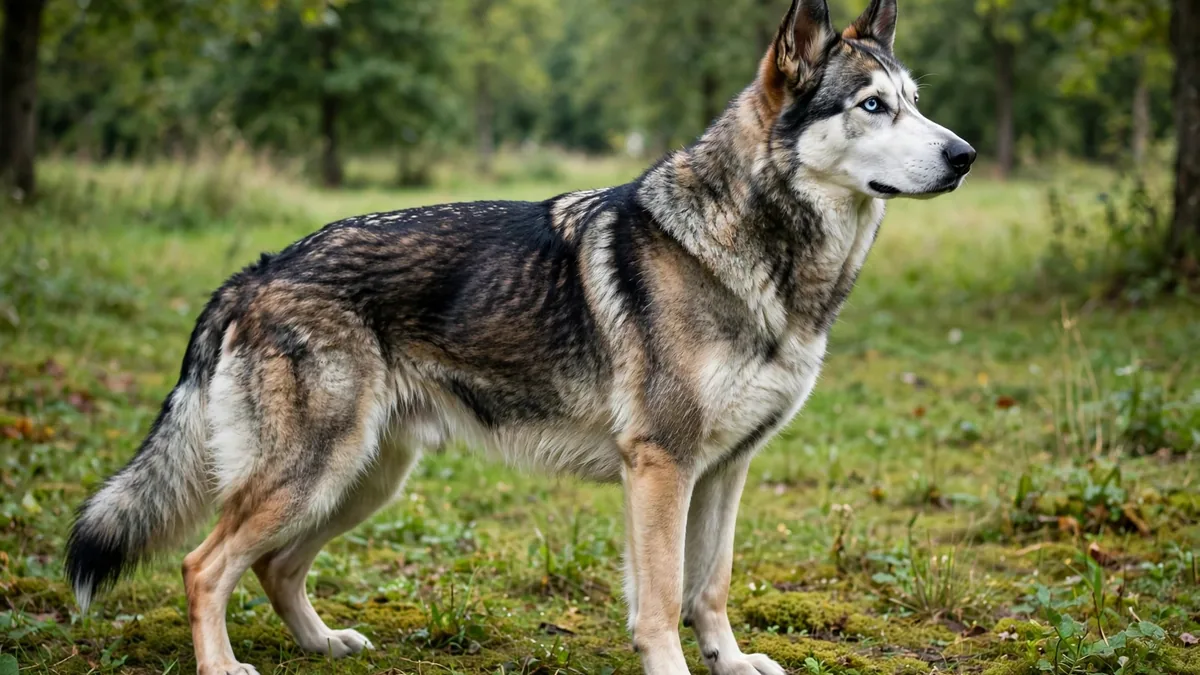
The AKC lists the Siberian Husky smaller. Males stand 21 to 23.5 inches and weigh 45 to 60 pounds. Females stand 20 to 22 inches and weigh 35 to 50 pounds. The Siberian Husky Club of America standard gives the same figures.
So a Shepsky usually lands between those frames. Most stand about 20 to 26 inches. Most weigh inside the wide 35 to 90 pound span the parents cover. Males tend to be larger than females, as in both parent breeds.
Read that as a frame, not a promise. A Husky-leaning puppy can finish near the smaller end, and a Shepherd-built one can pass the middle. You won’t know the adult size until your dog has finished growing.
Weight needs watching. The Husky standard says weight should stay in proportion to height, with excess penalised. A lean Shepsky will find exercise easier, and its joints will thank you later.
Coat colors and eye colors
Both parents carry a double coat of medium length. The German Shepherd Dog Club of America standard describes a dense outer coat lying close to the body. The Husky standard describes a soft, dense undercoat under straight guard hairs.
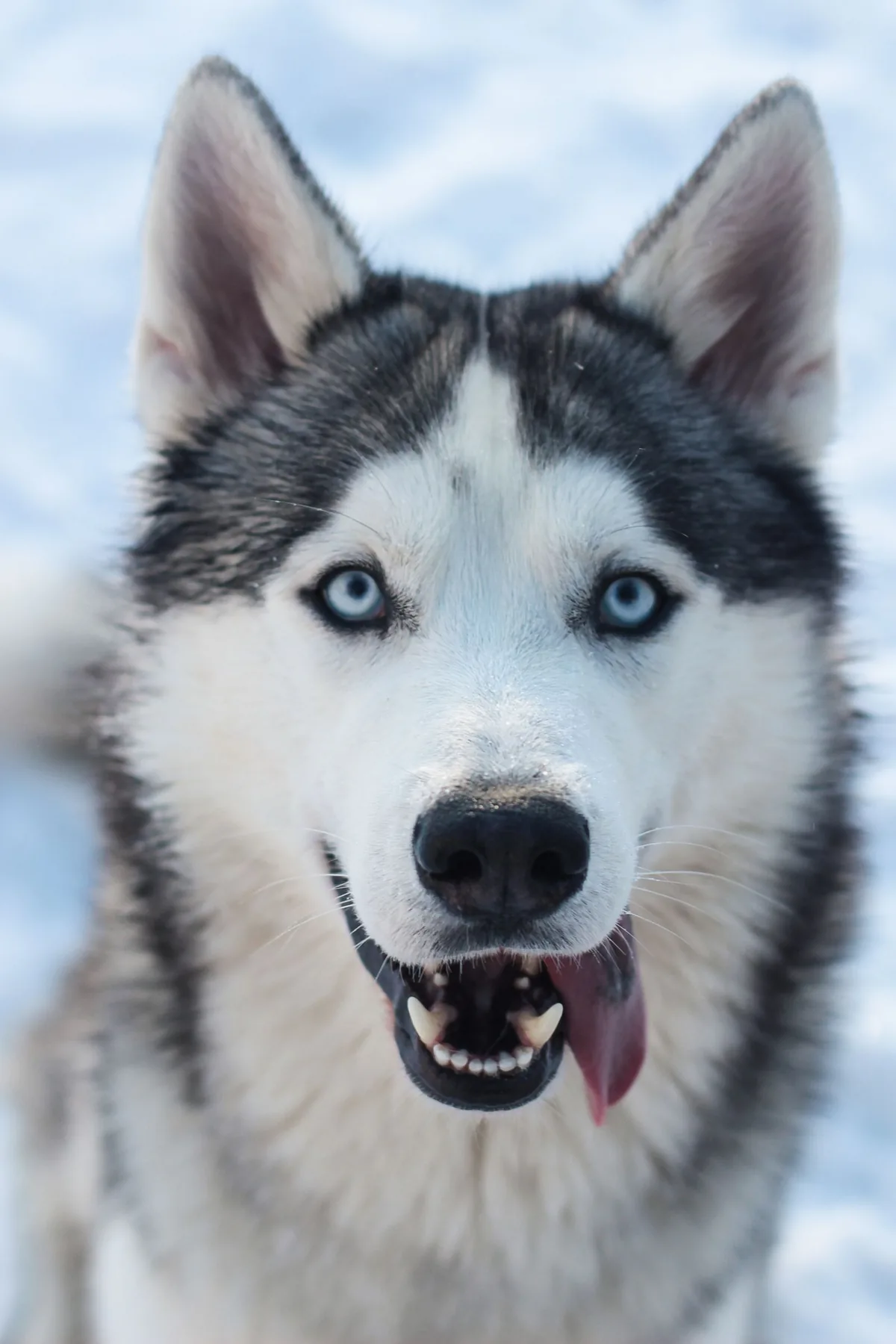
Colour is where prediction gets shaky. Shepherds vary in colour, and the club standard says most colours are permissible, with rich colours preferred. Huskies allow black, gray, agouti, sable, red, and white, solid or with markings.
A mix can show black and tan, sable, solid black, gray and white, red and white, or white. It can also show a blend nobody predicted.
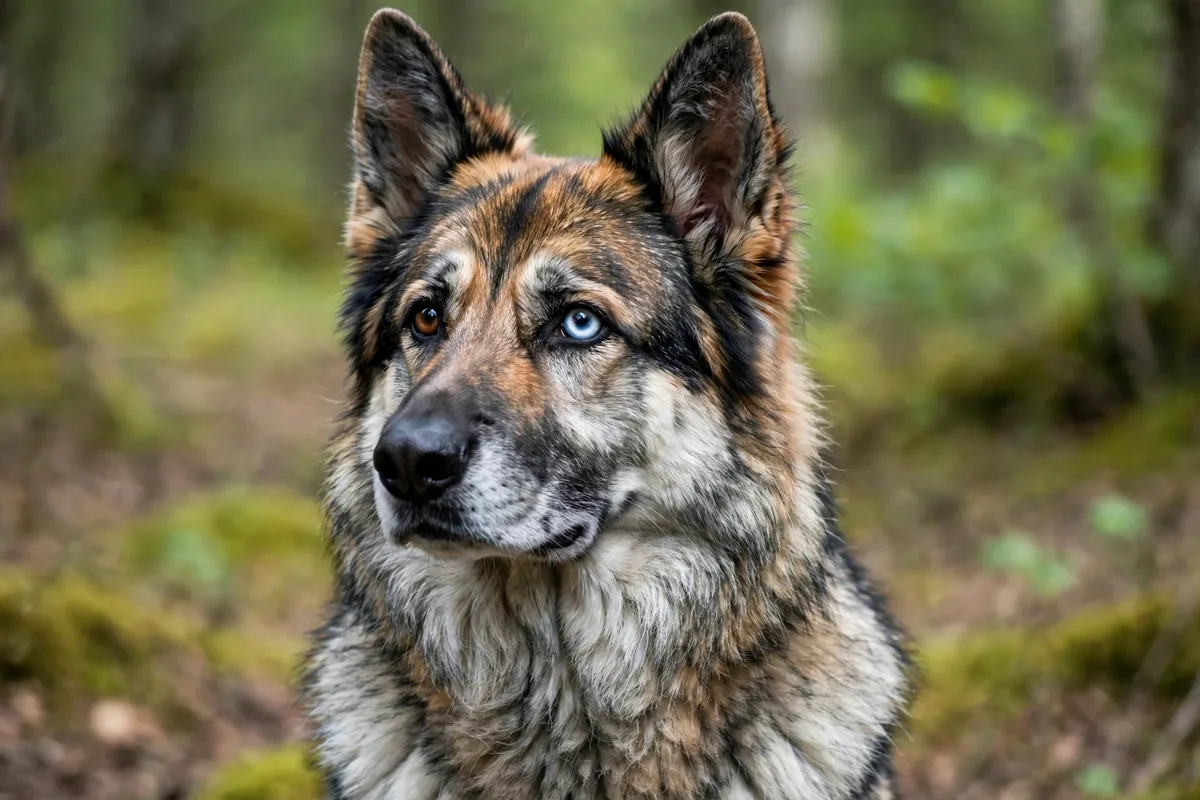
White deserves a quick note. White is disqualified in the AKC Shepherd show ring, but white Shepherds still exist as pets, and white Shepskies happen too.
Eyes vary widely. Shepherd eyes should be as dark as possible, per the club standard. Husky eyes may be brown or blue, one of each, or parti-colored, where one eye holds two colours.
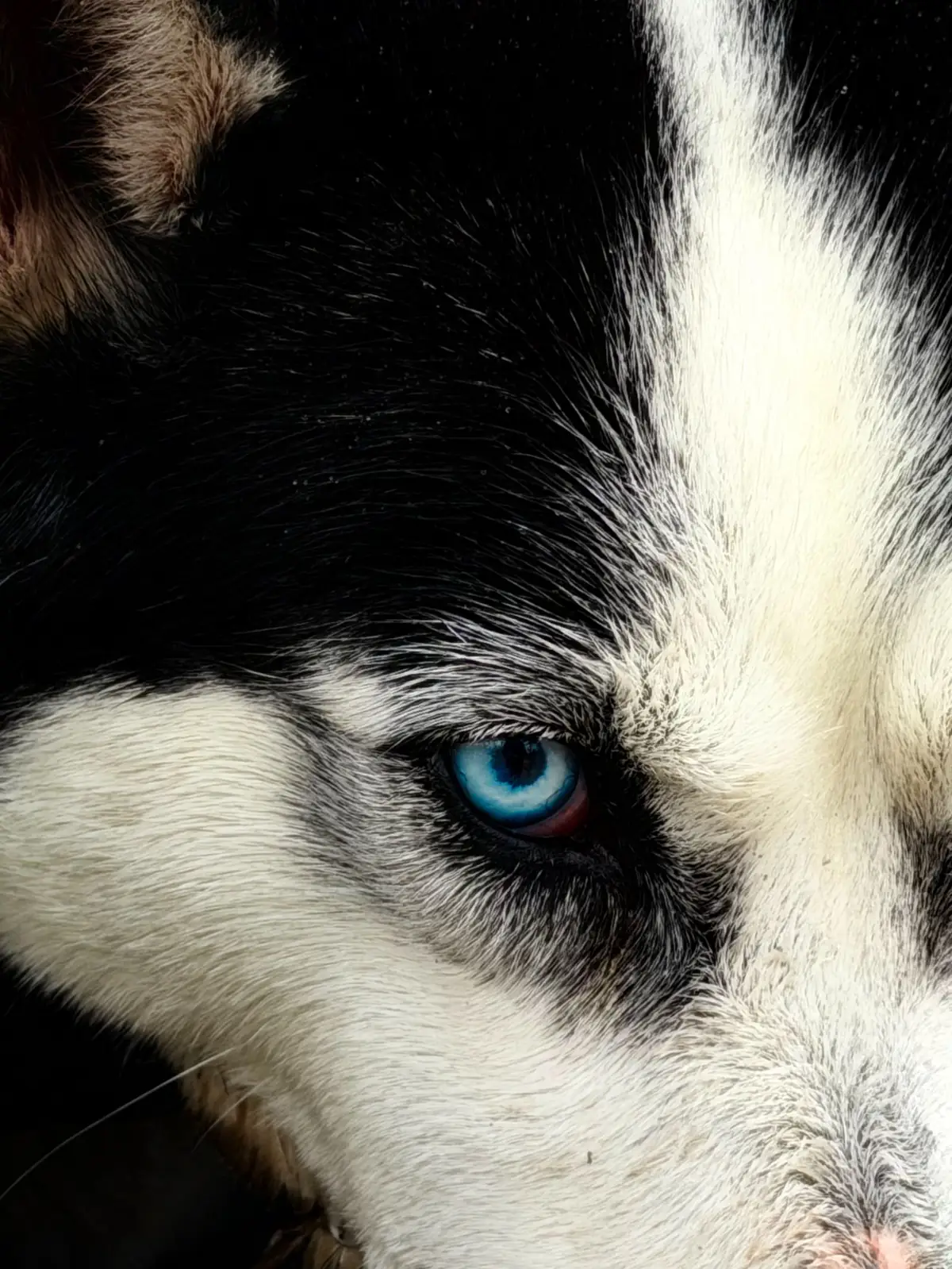
So your Shepsky may have brown eyes, blue eyes, or one of each, called heterochromia. Parti-colored eyes are possible too. You can’t order eye colour, and breeders who promise it are guessing.
Ears are usually upright, since both parents carry erect ears. The Shepherd standard even disqualifies hanging ears. Still, a mix can keep one softer ear tip.
Temperament
The two parents want different things from strangers. The Shepherd standard describes a dog that is direct, fearless, and self-confident, with a certain aloofness.
The Husky standard describes almost the opposite welcome. It calls the breed friendly, gentle, alert, and outgoing, without a guard dog’s possessive streak.
Your Shepsky will land between those poles, and which side leads depends on the dog, not the label. Most are loyal and watchful, and more social than a pure Shepherd.
Supervision matters with children and small pets. PDSA warns a Husky’s size and strength can knock smaller children over by accident. Its Shepherd guide asks for supervision around young children too. Socialise early, and judge the dog you actually have.
Exercise and training
PDSA sets a minimum of two hours of exercise a day for a German Shepherd. It sets the same two-hour minimum for a Siberian Husky.
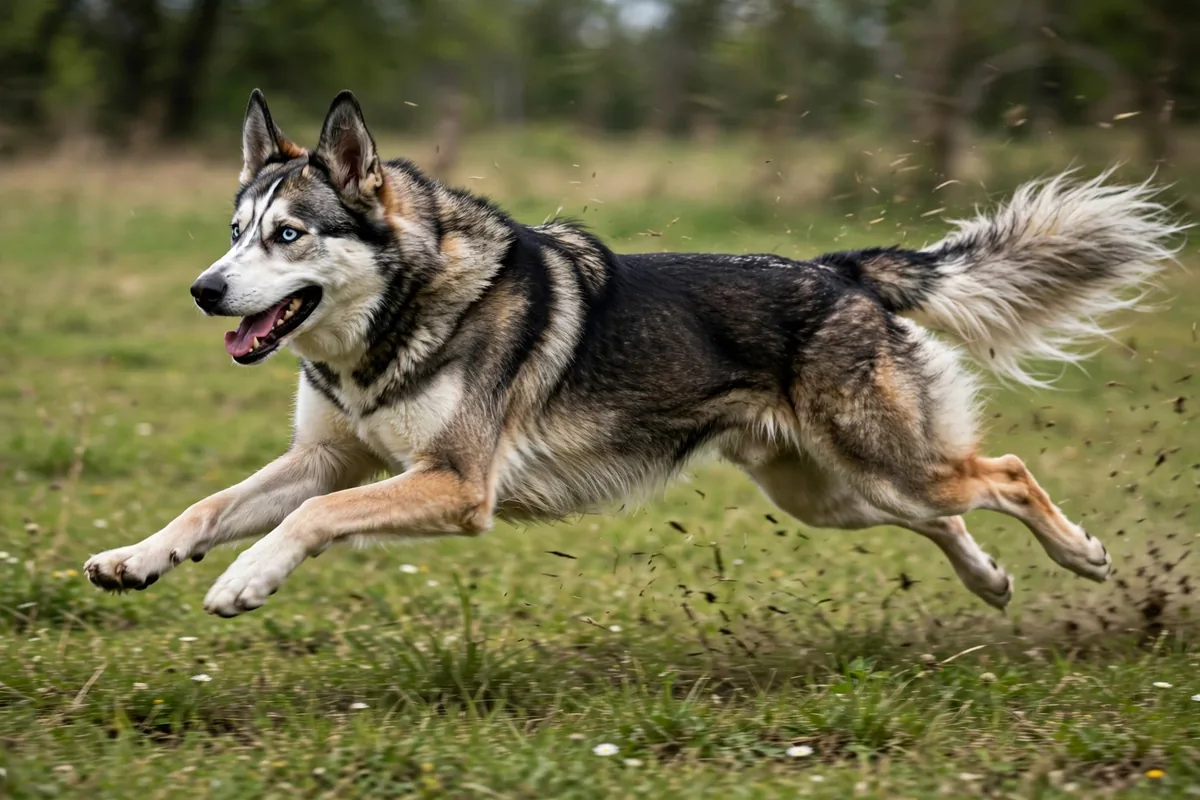
A mix of the two won’t need less. Treat two hours as the daily floor.
Mix walks, free running in a secure area, play, and training. Secure matters here. PDSA notes Huskies make escape attempts and need a secure garden with high fences.
My honest warning: I wouldn’t recommend this mix to a first-time owner whose life doesn’t already include long daily walks. A Shepsky that misses its run will often find its own job. That job is usually digging under the fence, chewing furniture, or redecorating a doorway.
PDSA links chewing and destructiveness to boredom and stress in both parent breeds. It isn’t spite. It’s unused energy with teeth.
PDSA warns that Huskies overheat easily in summer because of their thick coats. Walk early or late on hot days and skip the midday run.
Training splits down the middle too. Shepherds are eager and willing workers, per their club standard. Huskies are independent thinkers who need consistent, reward-based training, per PDSA.
So use rewards, keep sessions short and varied, and start socialisation early. Recall can stay unreliable around distractions, so practise in secure spaces first.
Shedding and grooming
Both parents shed heavily, and the mix doesn’t dilute that. PDSA says Huskies shed more than an average dog through the year, and even more in spring and autumn. The Shepherd side sheds year-round too.
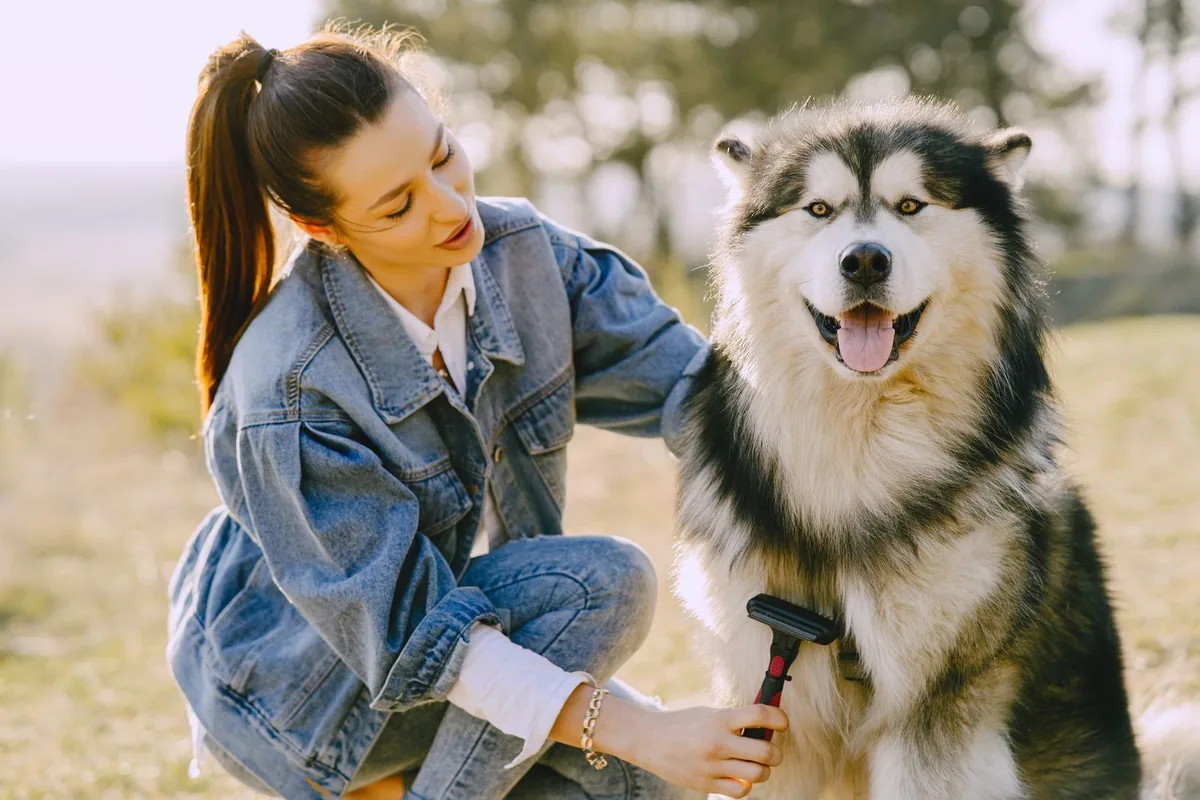
Expect hair on clothes, furniture, and every floor you own. That is the second warning. If loose hair bothers you, this is the wrong mix. No brushing routine makes a double-coated dog shed-free.
Brushing is still worth doing properly. PDSA advises brushing a Husky a few times a week, and the same for a Shepherd. AKC’s German Shepherd grooming guide passes on breeder advice ranging from every other day to weekly.
Those breeders increase to daily brushing during heavy shedding. Brush outside if you can. You’ll understand why after the first session.
Bathing can stay occasional. PDSA notes Shepherd skin can be sensitive to frequent bathing, and a professional groomer may be easier for a big dog.
Health and lifespan
A mix has no breed registry tracking its health, so look at both parents. Ask any breeder or rescue what screening the parents had.
PDSA lists hip dysplasia for both German Shepherds and Siberian Huskies. The Husky club explains how hip and eye results are recorded with the OFA. Parent hip scores and recent eye exams are fair questions to ask.
From the Shepherd side, add elbow dysplasia and degenerative myelopathy. UC Davis’s veterinary genetics lab describes degenerative myelopathy as an inherited disorder linked to the SOD1 gene. Signs usually begin at eight years or older, starting with hind-limb weakness and poor coordination.
Shepherds also bring a bloat risk. VCA Hospitals explains that large, deep-chested breeds are more prone to gastric dilatation and volvulus. Signs include restlessness, drooling, retching without producing anything, and a swollen abdomen.
VCA says those signs need immediate veterinary attention. Learn them now, not during an emergency.
From the Husky side, watch the eyes. PDSA lists cataracts and glaucoma among Husky eye problems, and epilepsy for the breed. It advises yearly screening for breeding dogs’ eyes. Eye changes in your dog deserve a prompt vet visit.
Lifespan needs an honest answer, because sources disagree. The AKC lists the Siberian Husky at 12 to 14 years. Its German Shepherd page currently lists 12 to 14 years too.
But a large Royal Veterinary College VetCompass study of UK Shepherds found an average lifespan of 10.3 years. So plan on roughly a decade with a Shepsky, possibly longer. Good weight control and steady vet care give your dog the best chance at the longer end.
Your next step is to audit your week before you audit any puppies. Count the hours you can give a dog every day. If two active hours plus training and brushing fit, this mix can suit you.
Read our full German Shepherd breed guide for the Shepherd side. Our White German Shepherd guide explains the white coat seen in this mix. Our Siberian Husky breed guide covers the Husky parent’s care needs.
FAQ
Most Gerberian Shepskies stand about 20 to 26 inches and weigh inside the parents’ 35 to 90 pound span. The Shepherd parent reaches 65 to 90 pounds, per the AKC. The Husky parent tops out at 60 pounds. Plan for a large dog either way.
Yes, heavily, all year. Both parents carry thick double coats, and PDSA says Huskies shed even more in spring and autumn. Brushing a few times a week helps, and daily brushing helps during heavy shedding. It reduces loose hair but never stops shedding altogether.
Plan on at least two hours a day. PDSA sets two hours as the minimum for a German Shepherd, and the same for a Siberian Husky. Spread it across walks, secure off-lead play, and training. Puppies and seniors need gentler amounts, so check with your vet.
Honestly, usually not. This mix combines high exercise needs, heavy shedding, and real strength. A committed first-time owner with a trainer’s help can manage one. If you want an easy first dog, I’d choose a calmer breed.
There’s no tracked figure for the mix itself. The AKC lists both parent breeds at 12 to 14 years. UK vet data put the German Shepherd average at 10.3 years. Expect roughly a decade or more, and focus on weight, exercise, and regular vet checks.
1 comment