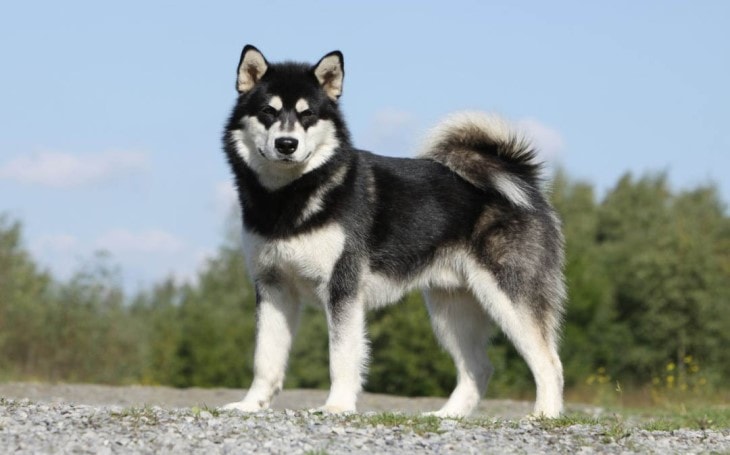
Alaskan Malamute at a glance
About the breed
Personality and traits out of 5
Friendliness and suitability
Alaskan Malamute Breed Overview
- Country of origin: United States (Alaska); the breed was developed by Mahlemut Inuit people for Arctic sled work.
- Other names: Mally, Mal
- Scientific name: Canis lupus familiaris
- Breed type and group: Spitz-type; Working Group
- Bred for: hauling heavy sleds in harsh Arctic conditions; also used for hunting and packing
- Size: large
- Recognized by: AKC, UKC, CKC, ANKC, NZKC, FCI, and KC (UK)
- Life span: about 10–14 years, with many living around 10–12
- Ideal weight: males about 85 lb (38.5 kg); females about 75 lb (34 kg)
- Ideal height: males about 25 in (64 cm); females about 23 in (58 cm)
- Coat: thick double coat with a dense undercoat and longer, coarse guard hairs
- Colors: shades from light gray to black, and in some registries seal, sable, or red, usually with white markings; unusual colors should be checked against the applicable breed standard
- Markings: distinctive face mask and cap, plus white on the face, chest, underbody, legs, and feet
- Apartment suitability: generally no; this breed needs substantial daily exercise and space, and a yard alone is not enough
- Similar breed: Siberian Husky, though the Alaskan Malamute is larger and heavier
- Historical use: Arctic expeditions, freight hauling, World War II sled-dog and search-and-rescue work, and the 1925 serum run to Nome
The Alaskan Malamute is a large, powerful Arctic sled dog built for endurance and heavy freight work rather than sprint racing. It is one of the older Arctic sled-dog breeds, but claims that its appearance has never changed should be treated cautiously; breed standards and breeding practices have shaped the modern dog.
Origin of Alaskan Malamutes
Alaskan Malamutes take their name from the Mahlemut Inuit people of western Alaska. Breed histories describe Arctic sled dogs moving with people across the Bering Strait region, with the Malamute developing as a freighting dog in some of the harshest conditions in Alaska.
They were bred to pull heavy sleds through snow and ice, not to be lap dogs or sprint-racing specialists. That history helps explain their strength, endurance, thick coat, and independent streak.
Are They Child-Friendly?
Alaskan Malamutes can live successfully with children when adults supervise and teach both the dog and the child how to behave safely. They are large, strong, and boisterous, so they can knock a child over during play. No breed is automatically safe for children, and a Malamute should not be expected to tolerate climbing, hugging, rough handling, or disturbed meals and sleep.
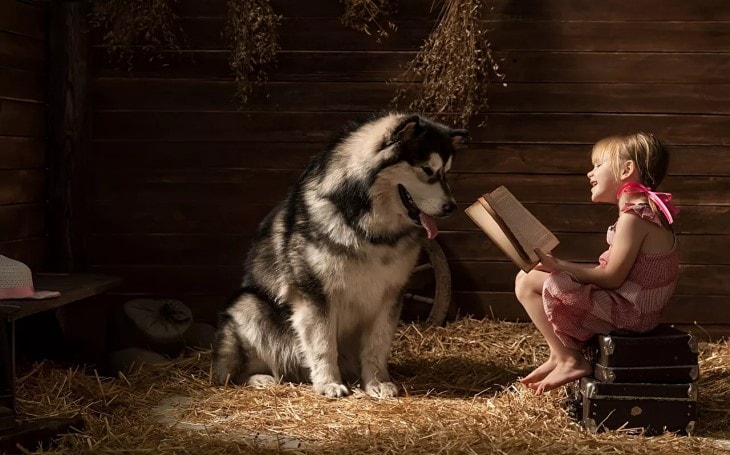
Image Via Wikipedia
Many Malamutes are affectionate with their families and enjoy attention, but temperament varies between individual dogs. Supervised, calm interactions and training that rewards polite behavior are safer than assuming a big dog will naturally put up with everything children do.
Behavior, Temperament & Personality Traits
Alaskan Malamutes are active, intelligent, social dogs that usually do best with owners who enjoy outdoor activity and can provide daily exercise and company. They are often friendly with people, but they are not universally friendly with every dog or small pet. Same-sex dog conflict, resource guarding, prey drive, and selective dog tolerance can occur, so early socialization and careful management matter.
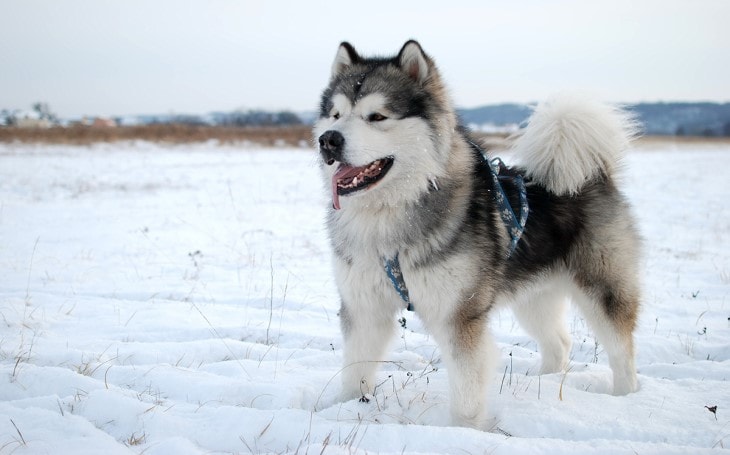
Image Via Gray Line Alaska
Some Malamutes guard food or toys. Feed dogs separately, avoid taking food away roughly, and teach cooperative handling and polite waiting rather than relying on punishment. They are social and attention-seeking and may become vocal, destructive, or anxious if left alone for long periods; gradual alone training can help prevent separation-related problems.
They have a playful, independent nature, but that independence can make them a challenge for first-time owners. They are not reliable guard dogs because they are often too friendly with strangers, although some will alert-bark.
Training and Exercise
Alaskan Malamutes are not a good fit for someone looking for an easy-to-obey first dog. They are intelligent and capable of learning, but they are also independent, strong-willed, and easily bored by repetition. Short, rewarding sessions, consistent household rules, and positive reinforcement training work better than harsh corrections or dominance-based methods.
The old idea that an owner must become the “pack leader” is outdated and can increase conflict. Modern training focuses on teaching the dog what you want, managing the environment, and rewarding good choices. Early socialization and puppy classes are useful, but physical exercise and mental work are equally important.
Malamutes need vigorous daily exercise appropriate to age and weather, plus enrichment such as sniffing, chews, puzzle toys, and safe training games. Avoid strenuous exercise in hot weather, and do not force growing puppies through repetitive high-impact activity. Because they were bred to pull, expect leash-pulling to need specific training; they are not reliably off-leash dogs.
Facts About the Alaskan Malamute
- The Alaskan Malamute is among the largest Arctic dog breeds, but calling it the single largest is debatable.
- They are slower than specialized sprint sled-racing dogs but built for heavy freight hauling.
- Malamutes need regular exercise and mental stimulation; a bored Malamute can be a noisy, destructive Malamute.
- Some lines can be affected by chondrodysplasia, a skeletal condition affecting cartilage and bone development; ask breeders about health testing.
- Alaskan Malamutes were part of the historic 1925 serum run to Nome.
Common Health Issues of the Alaskan Malamute
Alaskan Malamutes are generally robust, but they are not immune to inherited and age-related problems. The breed is most often discussed with concerns such as hip dysplasia, chondrodysplasia, hypothyroidism, inherited polyneuropathy, eye conditions including hemeralopia (day blindness), bloat, and obesity. Health screening and honest breeder records are more useful than assuming a breed is automatically healthy.
- General health: generally hardy, but routine veterinary checks and breed-relevant screening are still important.
- Common concerns to discuss with a veterinarian: hip dysplasia, chondrodysplasia, hypothyroidism, inherited polyneuropathy, eye disease, bloat (gastric dilatation-volvulus), and weight gain.
- Hypoallergenic: no; Malamutes shed heavily and produce dander like other double-coated dogs.
- Vaccination: core vaccines and rabies as required by local law; your veterinarian may recommend risk-based vaccines such as leptospirosis or kennel cough. Canine coronavirus vaccine is not universally recommended.
- Shedding: heavy, especially during seasonal coat blows.
- Drooling: usually low to moderate.
- Grooming: moderate to high; brush several times weekly and daily during heavy shedding, and check ears, nails, and teeth regularly.
- Weight gain: monitor body condition and adjust portions; obesity worsens joint and heart stress.
- Separation anxiety: some Malamutes are prone to distress when left alone, so teach alone time gradually.
- Diet: feed a complete, balanced diet appropriate for life stage and activity; no single protein or fat percentage suits every dog, so ask a veterinarian for individual guidance.
Bloat is an emergency. Learn the signs, avoid vigorous exercise immediately after large meals, and contact a veterinarian at once if the abdomen looks swollen or the dog is retching without producing anything.
Coat Color of the Alaskan Malamute
Alaskan Malamute coat colors are usually described as shades of gray, black, seal, sable, or red with white markings. The exact accepted range can vary by registry, so check the standard used in your country. Blue is not typically listed in Malamute standards, and unusual color claims should be verified with pedigree and health records rather than accepted at face value.
- Black and white
- Gray and white
- Silver and white
- Seal and white
- Sable and white
- Red and white
Alaskan Malamute Puppies
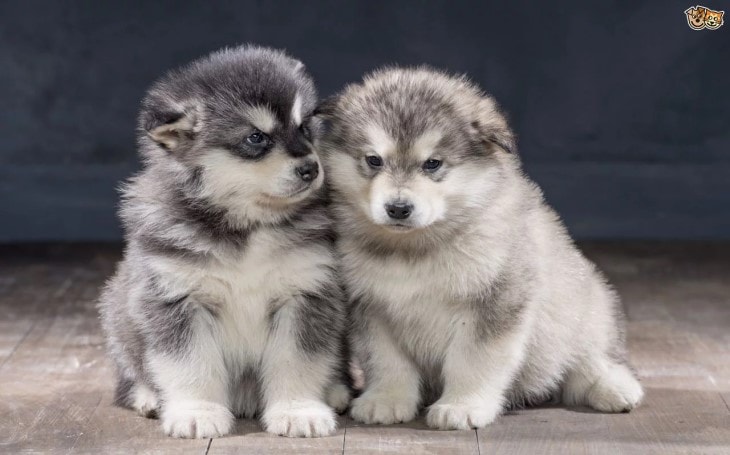
Image Via Pet4Homes
Litter size varies, and six puppies is not a fixed number. Puppy prices also vary widely by country, breeder, pedigree, health testing, and availability; the old range of £500–£1,000 should be treated only as a rough example, not a current market price. A responsibly bred puppy usually comes with health clearances for the parents, vaccination records, and breeder support.
Which Dogs Are They Similar To?
Visit Doglime for more dog breed information.
4 comments