Hug at a glance
About the breed
Personality and traits out of 5
Friendliness and suitability
Last updated: October 22, 2026
A husky pug mix, often called a Hug or Hug dog, crosses two breeds that live very different lives. One parent is a sled dog built for distance. The other is a small companion bred for laps. If you searched “husky pug mix 5 reasons to avoid”, you probably want the honest version, not a warning label.
This guide gives you that version. The mix can suit the right home well. It can also be a poor fit, and the reasons are practical, not dramatic.
| Quick facts | Husky Pug mix (Hug) |
|---|---|
| Parents | Siberian Husky and Pug |
| Also called | Hug, Hug dog |
| Size | Varies widely — see the parent ranges below |
| Coat | Varies; shedding is likely, from both parents |
| Lifespan | No fixed figure — parent breeds are listed at 12–14 years (Husky) and 13–15 years (Pug) by the AKC |
| Best suited to | Patient homes that can balance exercise, shedding and breathing care |
What is a Husky Pug mix (Hug)?
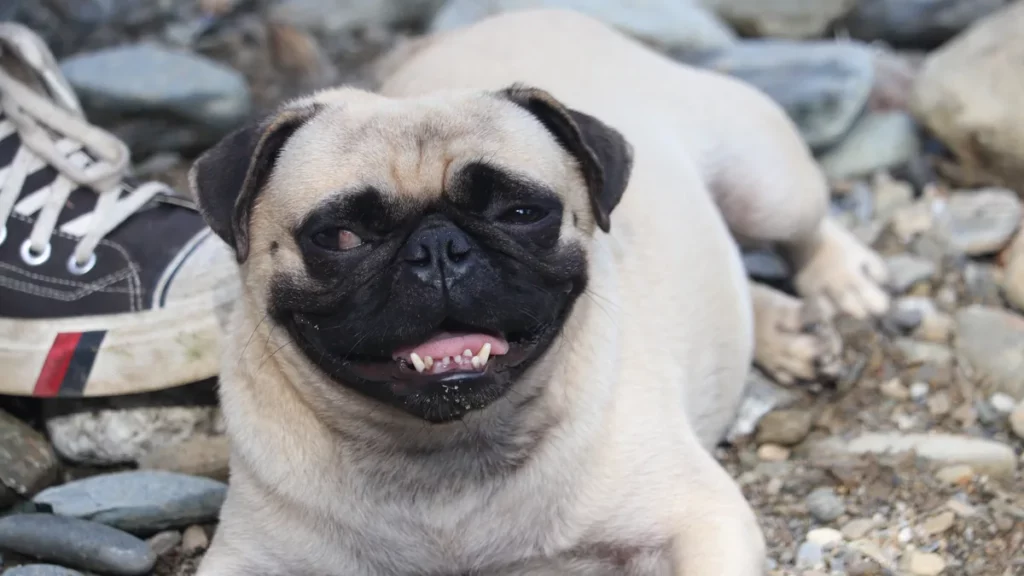
A Husky Pug mix is a cross between a Siberian Husky and a Pug. The nickname “Hug” simply joins the two names. It is a mixed breed, not a breed with a fixed standard.
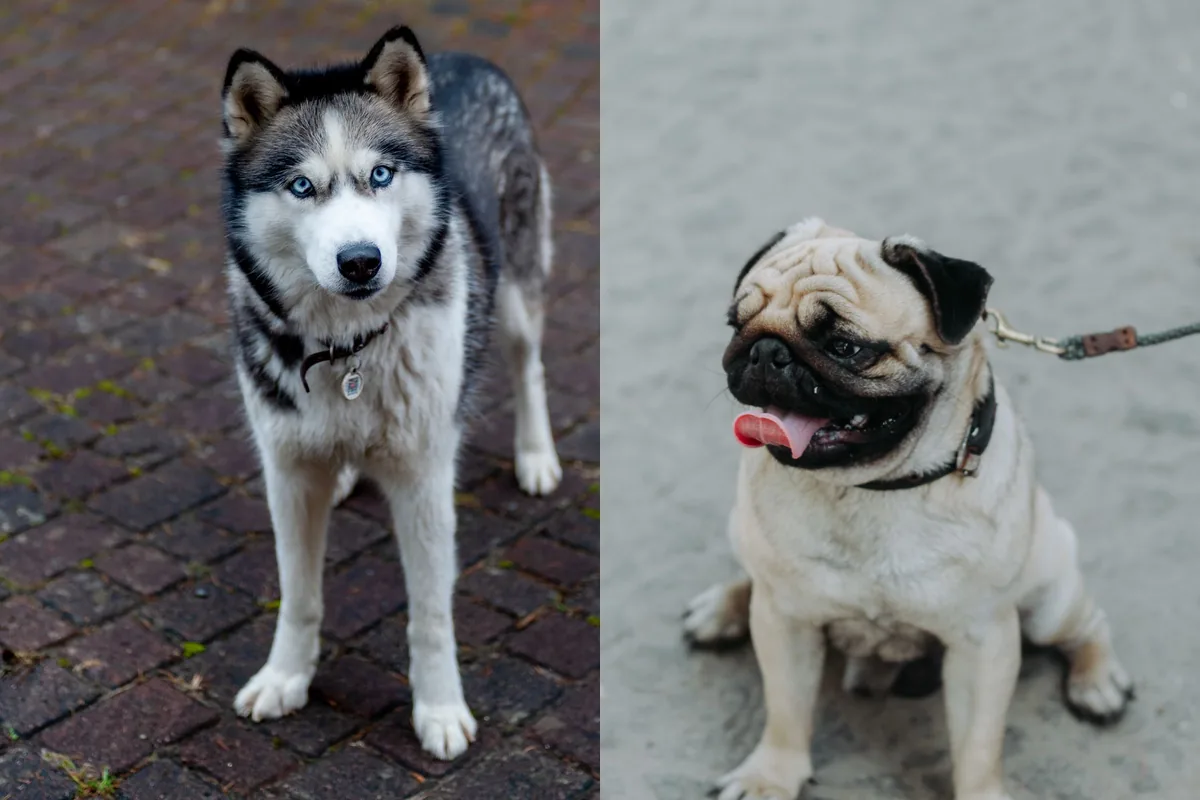
That last point matters more here than with most mixes. The parents sit far apart in size, shape and job. The AKC lists the Siberian Husky at 20 to 23.5 inches tall and 35 to 60 pounds. It lists the Pug at 10 to 13 inches and 14 to 18 pounds.
So a Hug puppy is not a predictable midpoint. One puppy may lean small and compact. A littermate may grow taller, longer and stronger. Anyone who promises you an exact adult size is guessing.
Temperament varies the same way. Huskies are friendly, outgoing working dogs with an independent streak — our Siberian Husky temperament guide shows that side in full. Pugs are devoted companions who like to stay close to their people, as our Pug temperament and personality guide sets out. Your Hug could land anywhere between those two poles, and you won’t know for sure until the dog grows up.
5 reasons a Hug may not suit you
None of these reasons makes a Hug a bad dog. They make it the wrong dog for some homes. Read them as a fit check, not a verdict.
1. Breathing and heat can limit daily life
The Pug is a brachycephalic breed, meaning it has a shortened skull and a pushed-in face. VCA Hospitals explains that this shape can narrow the airway. Signs can include noisy breathing, snorting and tiring quickly during exercise.
VCA also notes that signs are often worse in hot or humid weather. Affected dogs are more prone to overheating, because panting cools them less well. If your Hug inherits a shorter muzzle, summer walks need planning, not improvising.
You would need a harness rather than a neck collar for walks. VCA recommends a harness for dogs with this airway syndrome, since a collar adds pressure to the neck. You would also need to keep the dog lean, because extra weight worsens breathing.
2. The exercise needs pull in two directions
Here is the mix’s central tension, stated plainly. VCA’s Siberian Husky profile says the breed needs daily exercise, ideally a long walk or a long jog. It also says a well-fenced yard is essential.
The Pug side asks for the opposite pace. VCA’s Pug profile describes a leisurely walk and very short exercise. It states the Pug is not physically suited to overly vigorous exercise, and overheats easily.
Your Hug will land somewhere on that spectrum. You cannot know in advance where. If you want a running partner, a Pug-leaning Hug may not keep up safely — the same exercise mismatch runs through our Gerberian Shepsky guide, the Husky’s other popular cross. If you want a quiet lap dog, a Husky-leaning Hug may be restless and bored.
3. Shedding is likely heavier than you expect
A short Pug-like coat can mislead you here. VCA rates shedding as above average for the Siberian Husky. It rates shedding as above average for the Pug too.
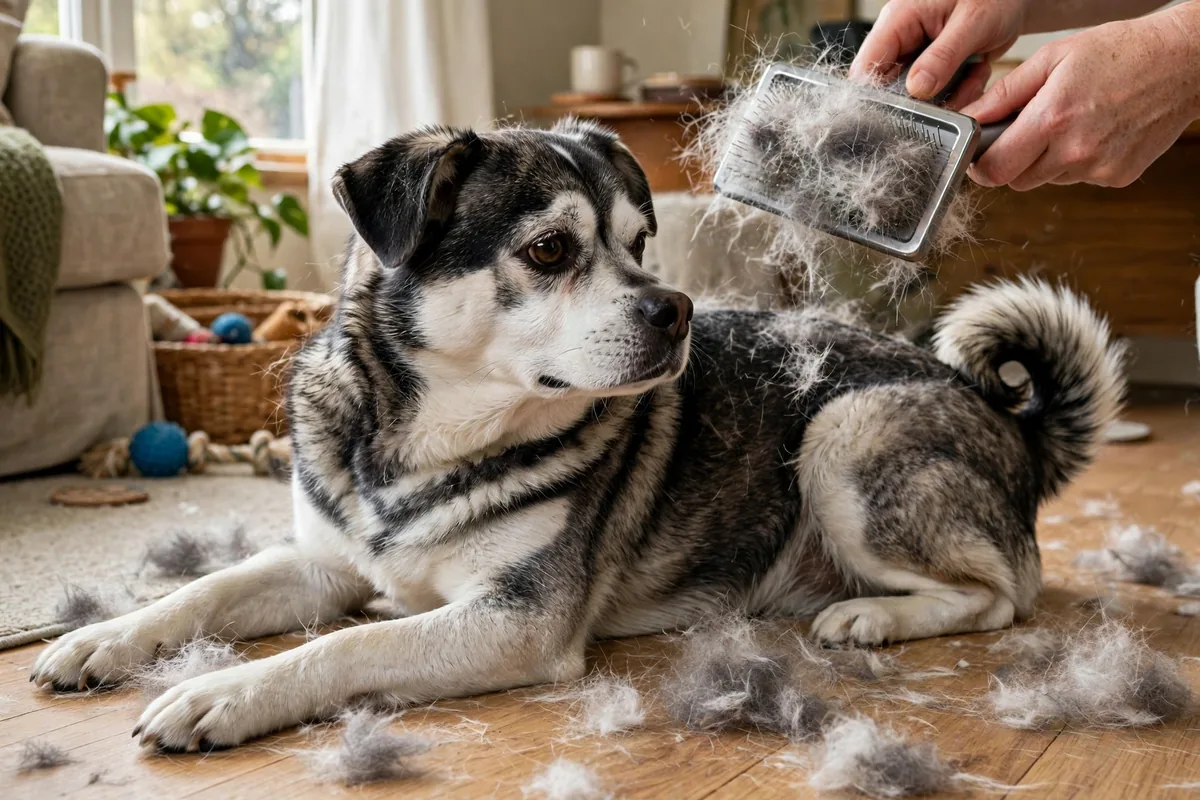
The Husky’s double coat needs brushing once or twice a week. VCA says to brush more often during shedding periods. So either parent can leave hair on your clothes, sofa and floors.
If loose hair around the home genuinely bothers you, think hard. This is not a low-shedding mix from either direction. A lint roller will become part of your routine.
4. You cannot predict the adult dog you are getting
Most mixes vary. This one varies across an unusually wide gap. Height, weight, muzzle length, coat and energy can all differ between littermates.
That uncertainty has real costs. You cannot size a crate, a car or a rental home with confidence. You cannot plan exercise around a puppy’s current pace. The adult dog may need a different routine entirely.
If predictability matters to you, this is a fair reason to pause. An adult Hug from a rescue is one honest workaround. With an adult, the size and energy in front of you are the ones you take home.
5. Training and alone time take patience
Huskies were bred to work and to think during that work. VCA calls obedience training essential for the Husky, for control and for mental exercise. An under-exercised, under-trained Husky mix can find its own entertainment indoors.
Pugs, meanwhile, were bred to stay close to people. VCA’s Pug profile describes a devoted family member who prefers companionship. A Hug that leans Pug may struggle with long, empty weekdays.
My honest take: I wouldn’t recommend this mix for a first-time owner in a small flat who works long hours away from home. The combination of training needs, exercise questions and company needs asks a lot. That is a fit judgement, not a judgement of the dog.
| Pros | Cons |
|---|---|
| Friendly, people-focused mix from two sociable parent breeds | Adult size, coat and energy are hard to predict |
| Can suit family life when exercise needs are met | Possible breathing and heat limits from the Pug side |
| No single rigid routine — you adapt exercise to your dog | Shedding is above average from both parent breeds |
| Often affectionate and keen to stay close to its people | Training and mental exercise need consistency |
| Adult rescues let you meet the finished temperament first | Not suited to vigorous exercise if the muzzle is short |
Who a Husky Pug mix suits
A Hug suits you if you can flex around the dog you actually get. That means time at home, or a plan for company during the day. It means daily walks you adjust to the weather and the dog’s breathing.
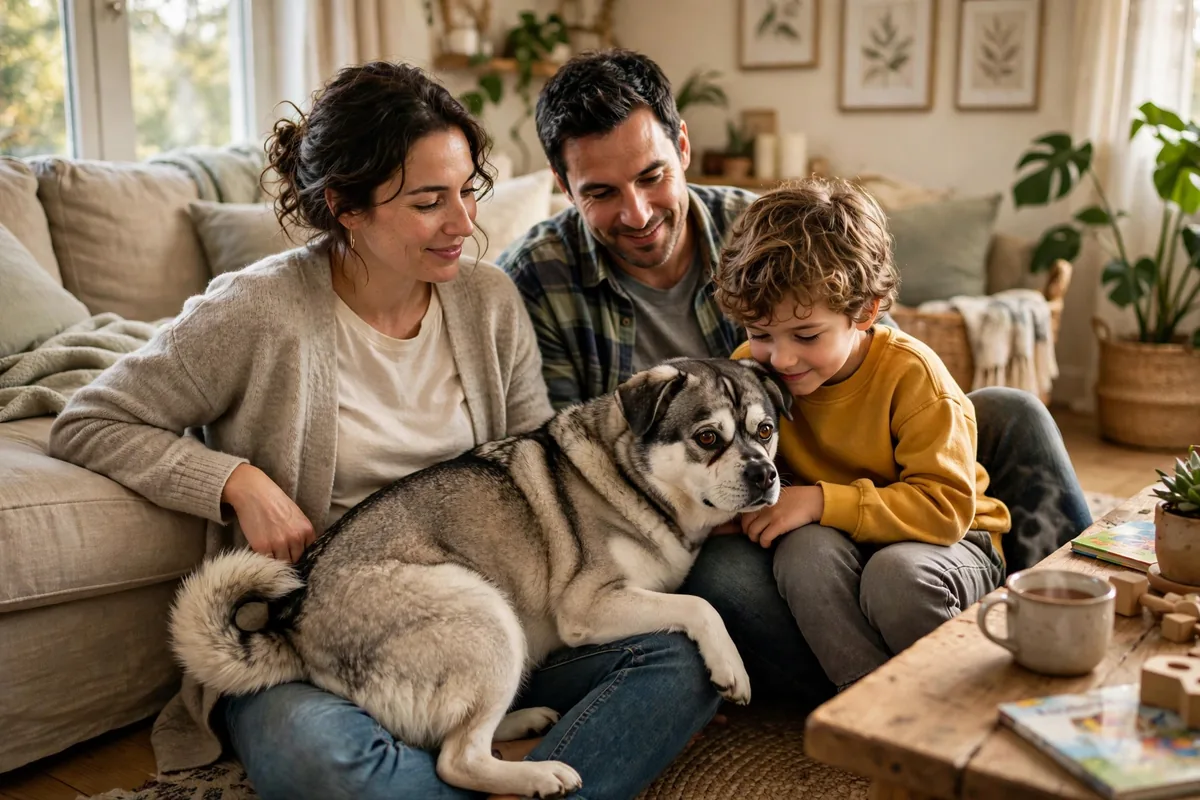
It suits a home that accepts hair on the furniture. It suits someone who enjoys training in short, regular sessions. It also suits people who like a dog that wants to be near them.
Families can do well here, with supervision as with any dog. Both parent breeds are generally sociable with people. The deciding factor is rarely the children. It is whether the adults can meet the exercise and care needs above.
You may struggle if your home is very hot without cooling. You may struggle if you travel often and board the dog regularly. And you may struggle if you wanted a guaranteed small dog. This mix makes no such guarantee.
Size and appearance
Expect a wide range, because the parent range is wide. Huskies stand 20 to 23.5 inches and weigh 35 to 60 pounds, per the AKC. Pugs stand 10 to 13 inches and weigh 14 to 18 pounds, per the AKC.
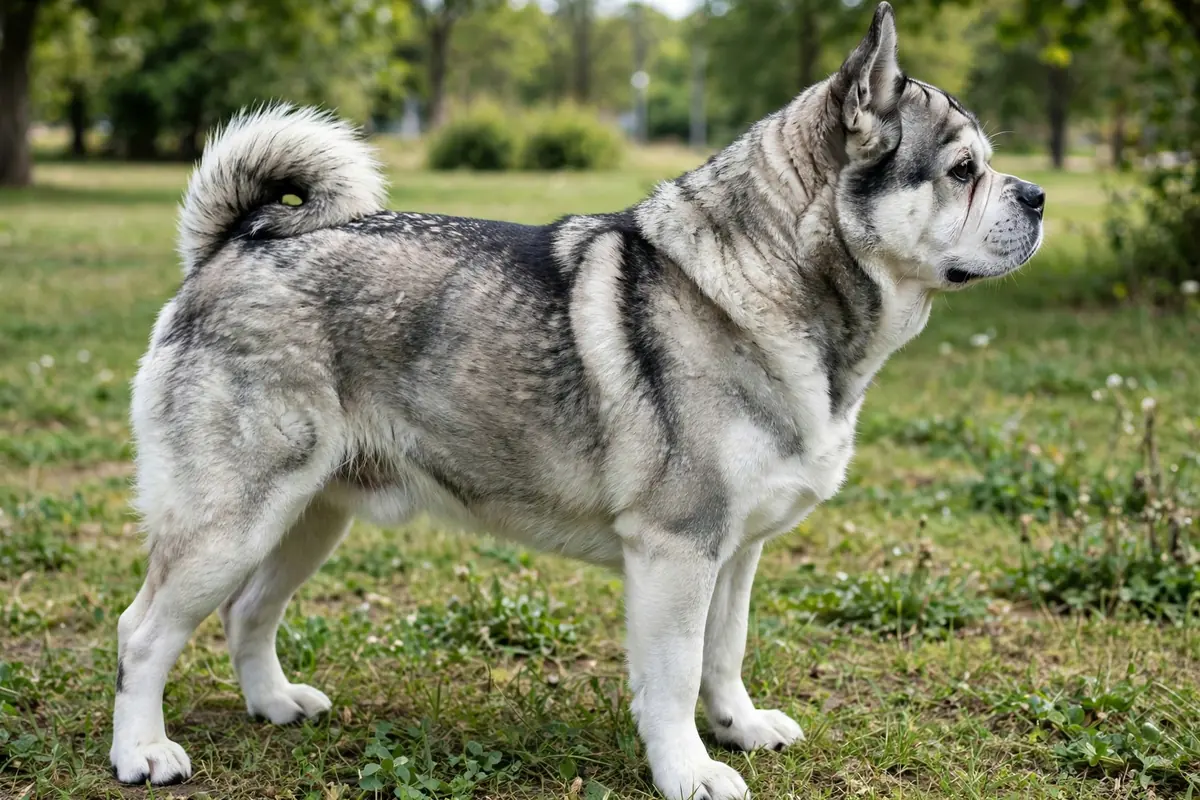
A Hug can fall anywhere between those two frames. Many land in the middle, but “many” is not a promise. Ask to see both parents, and ask about the sizes of earlier litters if there have been any.
Appearance varies just as much. Some Hugs keep a longer Husky-style muzzle and upright ears. Others show a shorter face, folded ears and a curled tail from the Pug side. Coat length and colour follow whichever parent the puppy takes after, and sometimes both.
Eye colour can vary too. I won’t give you a single “typical” Hug weight or height. No kennel club standard exists for this mix, so any exact figure would be invented.
Care and health
Start with breathing, because it shapes the rest of care. Watch for noisy breathing, heavy snorting or tiring very fast on walks. VCA notes that mildly affected dogs may be managed by controlling exercise and avoiding heat. Severe signs, collapse or fainting after exercise need a vet promptly.
Keep your Hug lean. VCA’s Pug profile notes that Pugs have a tendency to become obese. Extra weight also worsens breathing in dogs with airway problems. Measure meals, count treats, and check ribs and waist with your hands.
For exercise, build up slowly and watch the dog, not a target. Offer daily activity, but shorten it in heat or humidity. Stop if breathing gets loud or laboured. A harness, shade and water are basics, not extras.
For grooming, brush once or twice a week as a baseline. Brush more often when shedding picks up, following the VCA guidance for the Husky coat. If your dog has facial folds from the Pug side, keep them clean and dry. VCA notes that skin infections can occur in folds around the nose.
Before you commit, here is your one clear next step. Meet the parents if you can, or meet an adult Hug in rescue. Ask the vet who knows the dog about its breathing and exercise tolerance. Then compare the parent breeds in our Siberian Husky breed guide and our Pug breed guide. You can also compare other Pug crosses first — the Frenchie Pug, the Puggle, and the Pug-A-Pom — or browse our A–Z breed index if a more predictable dog suits your home better.
FAQ
A Husky Pug mix is commonly called a Hug, or a Hug dog. The name joins “Husky” and “Pug”. It is a mixed breed, so there is no official breed standard or registry for it.
There is no fixed size, because the parents differ so much. The AKC lists Huskies at 35 to 60 pounds and Pugs at 14 to 18 pounds. A Hug can fall anywhere between those ranges. Seeing both parents gives you the best clue.
Some do, and some do not. A Hug that inherits the Pug’s shorter face can have a narrowed airway, noisy breathing and trouble in hot weather. A longer muzzle lowers that risk. Ask a vet to check any dog you are considering.
Plan for above-average shedding. VCA rates shedding as above average for both the Siberian Husky and the Pug. Brush once or twice a week, and more often during heavier shedding. The exact coat depends on which parent your dog takes after.
It can be, if your family can meet its needs. Both parent breeds are generally sociable and people-focused. The fit depends on daily exercise, breathing care, training time and company during the day. An adult rescue dog lets you judge temperament before you commit.