Best Dog Food for Clumber Spaniels: Diet & Feeding Guide
Last updated: October 20, 2026
The best dog food for Clumber Spaniels is complete and balanced for your dog’s life stage. It must be measured properly and adjusted to keep ribs easy to feel. No single brand does that alone. The label and the portion matter more than bag marketing.
Clumbers make this harder than most breeds. They’re heavy-boned, food-motivated, and good at looking hungry after a full meal.
What Clumber Spaniels need in their diet
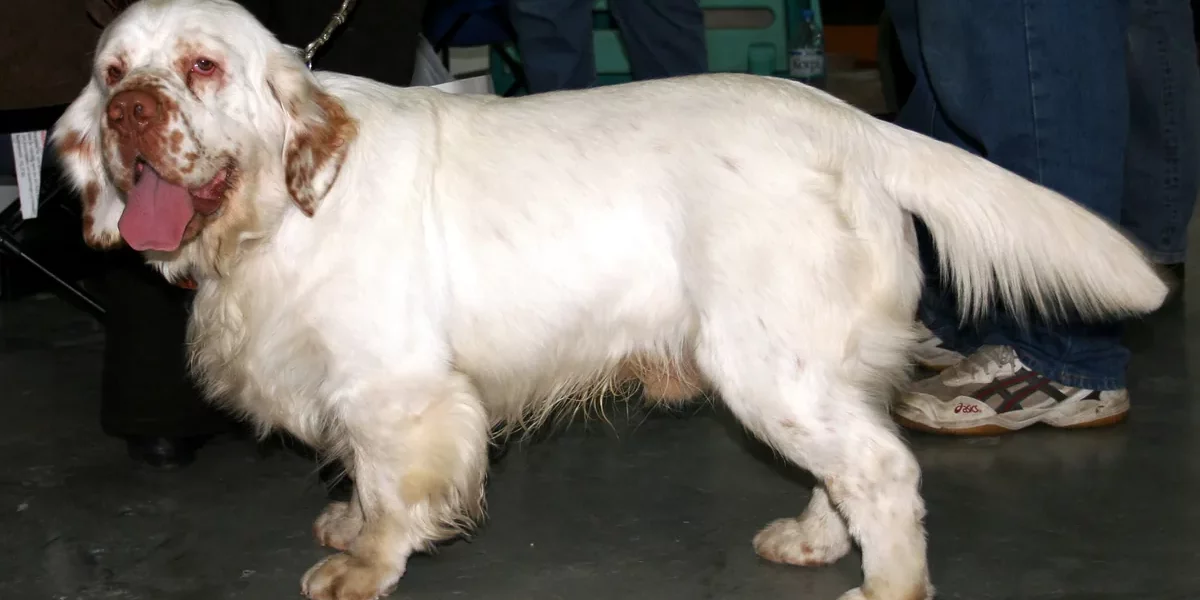
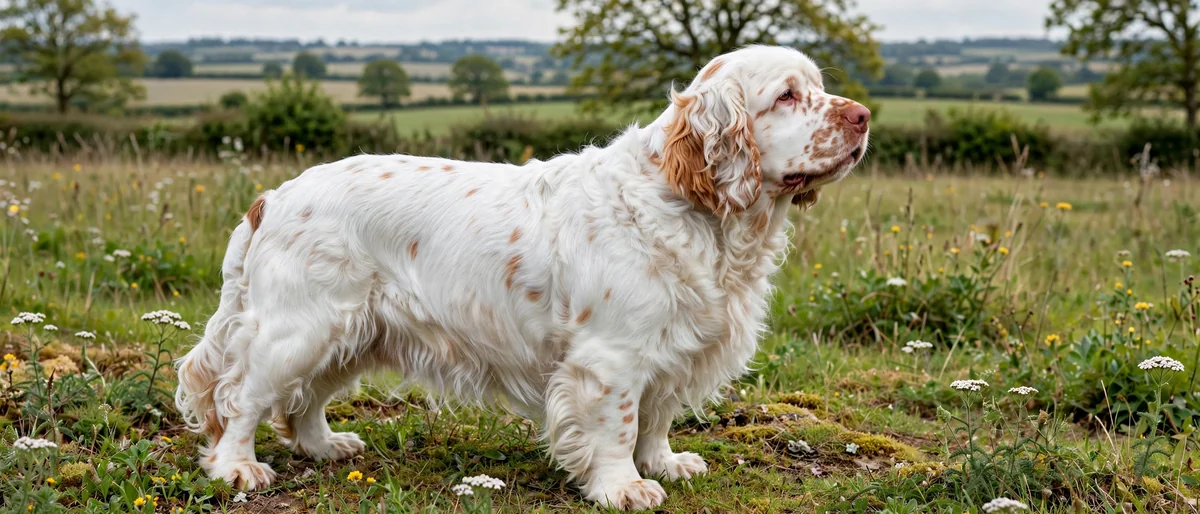
Start with the dog in front of you. The official AKC breed standard is published by the Clumber Spaniel Club of America. It puts males at 70 to 85 pounds and 18 to 20 inches tall. Females run 55 to 70 pounds and 17 to 19 inches.
That’s a lot of dog on a low frame. Extra pounds sit on joints daily.
So the first job of any diet is simple: maintain muscle without unneeded calories. Look for a food meeting the AAFCO Dog Food Nutrient Profiles for your dog’s life stage. Those profiles set minimum crude protein at 18.0% for adult maintenance. For growth and reproduction, the minimum is 22.5%, on a dry matter basis.
Minimum crude fat is 5.5% for adults. For growth and reproduction, it is 8.5%.
Read those numbers as minimums, not targets. A food at 30% protein isn’t automatically better than one at 24%. What counts is a complete, balanced recipe that suits your dog’s age and condition.
What to look for on a dog food label
Skip the front of the bag. Turn it over and check these things instead:
- The nutritional adequacy statement. It should say the food is complete and balanced for a named life stage. “Intermittent or supplemental feeding only” means it isn’t a main diet.
- The life stage itself. Puppy, adult maintenance, and all-life-stages foods are built differently.
- Calories per cup or per kilogram. You can’t portion properly without knowing its energy density.
- The maker’s name and contact details. The WSAVA Global Nutrition Committee’s guidelines on selecting pet foods suggest asking who formulates the food. Ask about their qualifications, feeding trials, and quality control too. Clear answers beat talk about “ancestral” eating.
Best types of dog food for Clumber Spaniels
Dry, wet, or mixed feeding can all work. Honestly, format is the least interesting decision here. The adequacy statement and portion decide the outcome.
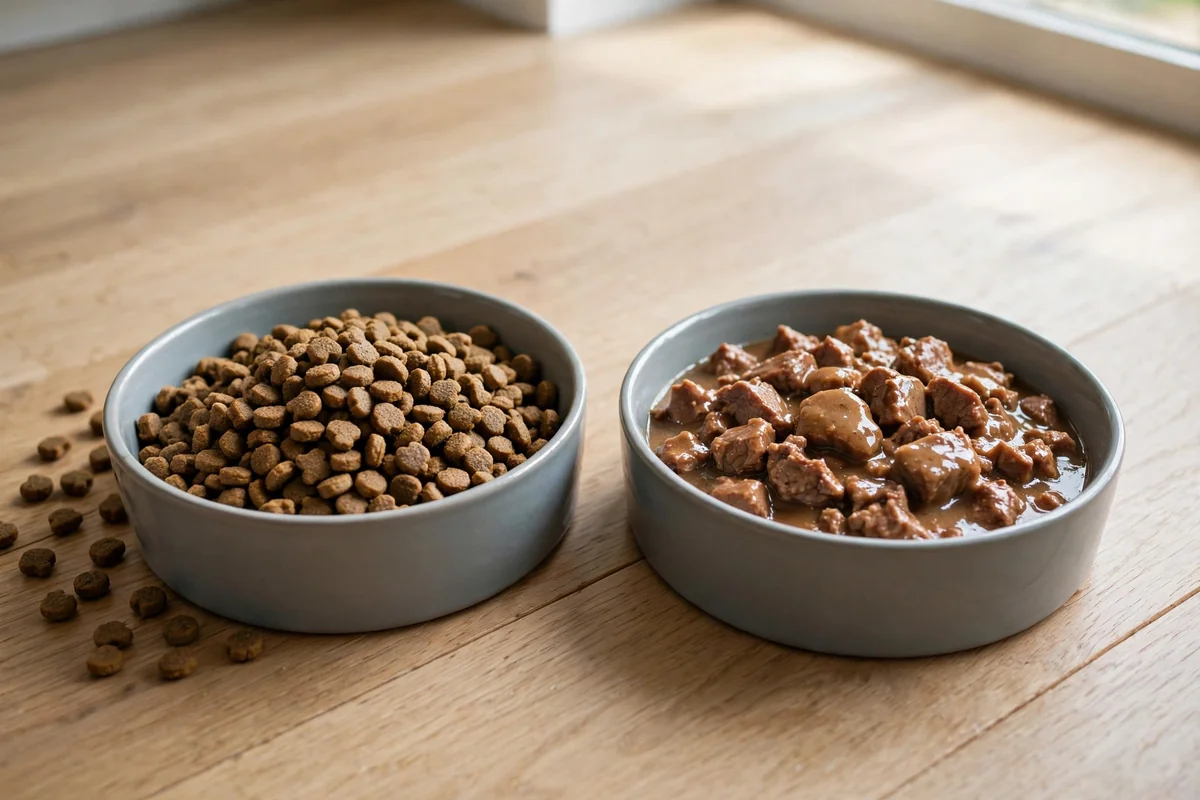
Dry food (kibble) is easy to measure and store, and it keeps portions consistent. Weigh it, or use the same measured scoop every time. A heaped cup is a mistake you’ll repeat twice a day.
Wet food suits picky eaters and dogs needing encouragement to eat. It’s bulkier per calorie, helping a dog feel fed. The catch is cost, storage once opened, and that low-looking protein percentage.
Mixed feeding — kibble with wet food on top — is where many owners land. Fine. Just count the topper inside the day’s food, not as a free extra.
And grain-free? My take: it’s a marketing category, not a quality stamp. A grain-free badge says nothing about testing or formulation. Choose on the adequacy statement, the maker, and how your dog does.
Feeding puppies vs adults vs seniors
Puppies need a food built for growth. The AAFCO gap is clear: 22.5% minimum protein and 8.5% minimum fat. Adults need only 18.0% and 5.5% by comparison.
Feed smaller meals more often, and change foods gradually. Clumbers are heavy youngsters, so steady growth beats fast growth.

Adults do well on a measured routine. Keep it boring: same food, same measure, same times. Your dog will still campaign for more. That’s the breed, not a sign the portion was wrong.
Seniors are where labels get slippery. AAFCO publishes profiles for only two groupings. They are growth and reproduction, and adult maintenance. So no separate official “senior” profile sits behind most senior foods.
An older Clumber needs muscle maintained and calories watched. If yours loses muscle or goes off food, that’s a vet conversation.
A note for every age: confirm portions with your veterinarian. Bag guides are starting points for an average dog. Few Clumbers are average about food.
Weight control for a heavy-boned breed
Here’s the uncomfortable part. A Clumber can look solid when he’s actually fat, because the standard calls for massive bone and substance. The scale alone won’t tell you the truth.
Use your hands. VCA Hospitals’ guide to knowing if your pet is overweight gives a practical check for home. You should feel the ribs easily under a slight layer of fat. From above, your dog should show a discernible, hourglass-shaped waist.
You should also feel the bony points around the hips and tail base.
Can’t feel ribs without pressing hard? No waist from above? Then the diet needs adjusting, whatever the bag’s guide says.
Three habits do most of the damage:
- Free-feeding. Food left down all day invites trouble, and Clumbers accept invitations. The AKC has noted that Clumbers can open a pantry, find snacks, and counter-surf despite standing only 18 to 20 inches tall. Close the pantry.
- Eyeballing portions. Measure every meal, and count treats inside the day’s total.
- Feeding the dog who just ate. Someone already fed him. A fridge note beats a second breakfast.
Reduce slowly, recheck ribs and waist regularly, and involve your vet if weight won’t shift. I won’t give a cup amount here. The honest answer depends on the food’s calories and your dog’s condition.
Foods to avoid
Some people food means an upset stomach. Some means an emergency. The ASPCA Animal Poison Control Center list, via ASPCApro, covers the main dangers:
- Chocolate, coffee, and caffeine — methylxanthines can cause vomiting, tremors, and seizures.
- Grapes and raisins — these can cause kidney failure in dogs.
- Onions, garlic, and chives — they can irritate the gut and damage red blood cells.
- Xylitol — a sweetener in sugar-free gum and candy; it can trigger insulin release and liver failure.
- Macadamia nuts — linked to weakness, vomiting, tremors, and raised temperature.
- Alcohol and raw yeast dough — both can cause serious, fast-moving problems.
- Raw or undercooked meat and eggs — a Salmonella and E. coli risk for dog and owner.
If your Clumber eats something listed here, don’t wait for symptoms. Note what he ate and how much. Then call your veterinarian or ASPCA Animal Poison Control straight away.
Your next step is small: flip your food over tonight. Find the adequacy statement and the calorie line. Then run the rib-and-waist check. If either check fails, book a portion review with your vet.
Read our full Clumber Spaniel breed guide for the breed picture. Our Clumber Spaniel puppies guide covers the first year. Our Cocker Spaniel breed guide shows a lighter spaniel for contrast. If you are comparing spaniels, our Sussex Spaniel, Field Spaniel, Boykin Spaniel and Welsh Springer Spaniel breed guides show how the other spaniel breeds differ.
FAQ
The best dog food for Clumber Spaniels is a complete, balanced food for your dog’s life stage, with a clear adequacy statement. Check it meets the AAFCO profile for that stage. Then portion by calories and body condition. Brand loyalty matters far less.
There isn’t one honest cup amount. Foods differ widely in calories per cup. Start with the guide for your dog’s weight, then adjust by the rib-and-waist check. Confirm the portion with your veterinarian, especially for puppies and overweight dogs.
Either can be right, and many owners mix both. Dry food is easier to measure precisely, which helps weight control. Wet food suits picky dogs and adds water. Judge both on the adequacy statement, not headline percentages.
Feel for the ribs: they should be easy to find under a thin fat layer. Look from above for a clear waist behind the ribs. Heavy bone hides extra weight well, so trust your hands over your eyes. Your vet can confirm body condition at a check-up.
The same foods toxic to dogs generally: chocolate, grapes, raisins, onions, garlic, chives, xylitol, macadamia nuts, alcohol, and caffeine. Small amounts of grapes or xylitol can do real harm. Call a vet immediately if your dog eats any of them.